
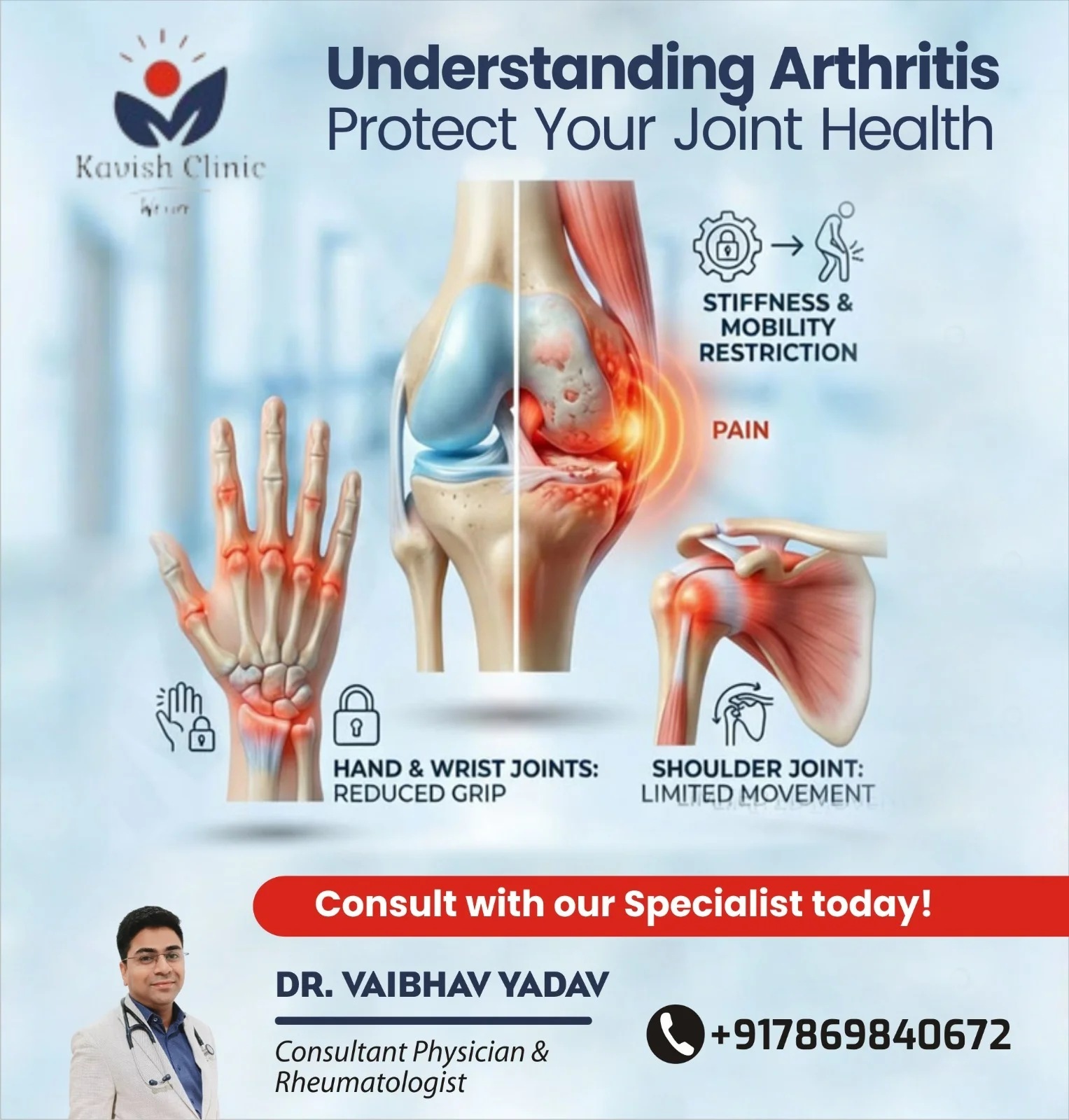
Arthritis is not a single disease. It is a broad term used for conditions that affect the joints and may cause pain, stiffness, swelling, reduced movement, or difficulty performing everyday activities. Some types develop gradually with age, while others are linked to inflammation, autoimmune conditions, metabolic disorders, infections, or previous joint injuries.
People searching for an Arthritis in Indore often need more than temporary pain relief. The important step is identifying the type of arthritis, understanding which joints are affected, and creating a treatment plan based on symptoms, medical history, examination findings, and necessary investigations.
At Kavish Clinic, patients can seek consultation for arthritis, persistent joint pain, morning stiffness, hand and wrist discomfort, shoulder restriction, knee symptoms, and other rheumatological concerns. Dr. Vaibhav Yadav, Consultant Physician & Rheumatologist, evaluates patients with a focus on understanding the underlying reason for their joint problems and planning appropriate care.
What Is Arthritis?
Arthritis refers to inflammation or degeneration involving one or more joints. The condition can affect cartilage, joint lining, surrounding tissues, tendons, or even other organs depending on the specific type.
Common symptoms may include:
The pattern of symptoms provides important clues about the possible cause.
Why Arthritis Should Not Be Ignored
Occasional discomfort after strenuous activity may settle naturally, but persistent or recurrent symptoms deserve attention.
Untreated inflammatory arthritis can sometimes lead to progressive joint damage. Degenerative conditions can also affect mobility and quality of life when symptoms are not managed appropriately.
Seeking Arthritis Treatment in Indore at the right time can help clarify the diagnosis and reduce the risk of unnecessary delay.
Early evaluation is particularly important when pain is associated with swelling, prolonged morning stiffness, multiple joint involvement, or reduced function.
Common Types of Arthritis
Different forms of arthritis require different treatment approaches. This is why diagnosis should come before treatment.
Osteoarthritis
Osteoarthritis is one of the most common forms of arthritis. It generally develops when joint cartilage changes gradually over time.
Frequently affected areas include:
Symptoms may include activity-related pain, stiffness after rest, reduced mobility, or difficulty climbing stairs.
A Joint Pain in Indore may assess the severity of symptoms and recommend lifestyle modifications, exercise, medication, weight management, or other treatment options.
Rheumatoid Arthritis
Rheumatoid arthritis is an autoimmune inflammatory condition in which the body's immune system attacks joint tissues.
It often affects smaller joints such as those in the hands and wrists but may involve several joints throughout the body.
Typical features can include:
Consultation with a Rheumatoid Arthritis Doctor in Indore is particularly important because early treatment may help control inflammation and protect joint function.
Gout
Gout is an inflammatory arthritis associated with the deposition of uric acid crystals in joints.
Attacks can cause:
The big toe is commonly affected, but gout can involve other joints as well.
Management may include controlling acute attacks, evaluating uric acid levels, reviewing diet and medicines, and planning long-term prevention when required.
Ankylosing Spondylitis
Ankylosing spondylitis is an inflammatory condition that primarily affects the spine and sacroiliac joints.
Symptoms can include:
Younger individuals with persistent inflammatory-type back pain should consider rheumatological assessment.
Arthritis in the Hand and Wrist
Hand and wrist symptoms can significantly affect routine activities such as writing, opening bottles, typing, cooking, and gripping objects.
Patients may notice:
These symptoms can occur in rheumatoid arthritis, osteoarthritis, gout, tendon problems, or other conditions.
A Rheumatologist in Indore can evaluate the pattern and determine whether the problem is inflammatory or mechanical.
Knee Arthritis and Mobility Problems
The knee is a weight-bearing joint and is frequently affected by arthritis.
Patients may experience:
Not every person with knee pain needs surgery.
Depending on the cause and severity, treatment may involve weight management, physiotherapy, activity modification, medicines, injections, or other approaches.
Shoulder Arthritis and Limited Movement
Shoulder discomfort can make simple activities such as combing hair, reaching overhead, or dressing difficult.
Arthritis is one possible cause, but shoulder pain may also result from tendon problems, frozen shoulder, injury, or inflammation.
Patients should seek assessment when shoulder movement becomes persistently restricted or painful.
What Is Morning Stiffness?
Morning stiffness is an important symptom in rheumatology.
Many people with inflammatory arthritis report that their joints feel especially stiff after waking.
The duration matters.
Short-lived stiffness may occur with degenerative joint conditions, while prolonged morning stiffness can sometimes suggest inflammatory arthritis.
A detailed history helps the doctor distinguish between different possibilities.
When Should You Consult an Arthritis Specialist?
Consider consulting an Arthritis in Indore if you experience:
Seeking care early can help prevent prolonged uncertainty and inappropriate self-treatment.
How Is Arthritis Diagnosed?
Diagnosis usually begins with a detailed consultation.
A rheumatologist may ask about:
Physical Examination
The doctor may check for:
Blood Tests
Depending on the suspected condition, investigations may include:
Not every patient requires every test.
Imaging
X-rays, ultrasound, or MRI may be advised depending on the joint and suspected diagnosis.
Arthritis Treatment in Indore
Treatment should be individualized according to the type of arthritis.
Options may include:
Medicines
Pain-relieving or anti-inflammatory medicines may be used where appropriate.
For autoimmune inflammatory arthritis, disease-modifying medicines may be necessary to control the underlying condition.
These medicines should be taken under medical supervision.
Physiotherapy and Exercise
Movement is an important part of arthritis management.
Suitable exercise may help improve:
Exercise plans should be adapted to the affected joints and severity of symptoms.
Weight Management
Excess body weight can increase stress on weight-bearing joints, particularly the knees and hips.
Gradual weight reduction may help improve comfort and movement in selected patients.
Lifestyle Modification
Helpful measures may include:
Why Self-Medication Can Be Risky
Joint pain is often treated casually with over-the-counter painkillers. While such medicines may provide temporary relief, they do not identify the underlying cause.
Long-term or frequent unsupervised painkiller use can also have side effects involving the stomach, kidneys, heart, or blood pressure in some individuals.
Persistent joint pain should therefore be evaluated rather than repeatedly masked.
Can Arthritis Be Prevented?
Not every type of arthritis can be prevented.
However, several lifestyle measures may help protect joint health and reduce avoidable strain:
Early diagnosis is especially important for autoimmune arthritis because treatment can influence long-term outcomes.
Rheumatology Care for More Than Arthritis
A rheumatologist also evaluates several conditions beyond common arthritis.
These may include:
This is why patients with unexplained multisystem symptoms may be referred to a rheumatologist for further evaluation.
Frequently Asked Questions
1. Which doctor should I consult for persistent arthritis pain?
A rheumatologist is trained to diagnose and manage inflammatory, autoimmune, and several other joint disorders. Persistent swelling, prolonged stiffness, or pain affecting multiple joints should be evaluated professionally.
2. Can arthritis occur at a young age?
Yes. Although osteoarthritis is more common with increasing age, inflammatory conditions such as rheumatoid arthritis, ankylosing spondylitis, and juvenile arthritis can affect younger individuals.
3. Does every patient with arthritis need lifelong medication?
No. Treatment depends on the specific type of arthritis. Some conditions may require long-term management, while others may be treated for shorter periods. Medication decisions should be individualized.
4. Can exercise make arthritis worse?
Appropriate exercise is generally helpful for many types of arthritis. However, exercise should match the condition and severity. During severe inflammation or acute injury, temporary modification may be necessary.
Protect Your Joint Health With Timely Arthritis Care
Joint pain, stiffness, swelling, and restricted movement can gradually interfere with independence and everyday activities. Understanding the cause is more important than repeatedly treating the symptom.
If you are searching for an Arthritis Doctor in Indore, Rheumatologist in Indore, Joint Pain in Indore, or professional Arthritis Treatment in Indore, timely assessment can help determine whether your symptoms are related to osteoarthritis, rheumatoid arthritis, gout, or another rheumatological condition.
At Kavish Clinic, Dr. Vaibhav Yadav provides rheumatology consultation for patients with arthritis, inflammatory joint disorders, and related musculoskeletal concerns.
Contact Us Today
Do not allow persistent joint pain or stiffness to gradually limit your movement. Schedule a consultation with an experienced rheumatologist and take the first step toward understanding your condition, protecting joint function, and improving everyday mobility.
| Tags: | #Arthritis in Indore |


