
Ankylosing Spondylitis Treatment in Indore – Symptoms, Diagnosis and Long-Term Management
Persistent lower back pain, prolonged morning stiffness, buttock discomfort, or recurring pain around the heels and other tendon attachment points may sometimes indicate more than simple muscle strain. One condition that can cause these symptoms is ankylosing spondylitis, a chronic inflammatory form of arthritis that mainly affects the spine and sacroiliac joints.
People searching for Ankylosing Spondylitis Treatment in Indore should consider specialist evaluation when back pain continues for several weeks, is worse after rest, or improves with movement rather than complete inactivity. Dr. Vaibhav Yadav provides rheumatology consultation for inflammatory joint and spine conditions at Kavish Clinic, where evaluation is based on symptoms, physical examination, medical history, laboratory findings, and imaging when required.
What Is Ankylosing Spondylitis?
Ankylosing spondylitis is an inflammatory arthritis that primarily affects the spine and the sacroiliac joints, which connect the lower spine to the pelvis.
It belongs to a broader group of conditions known as spondyloarthritis.
Inflammation can cause chronic pain and stiffness. In some people, prolonged inflammation may gradually reduce flexibility of the spine.
The condition can also affect areas outside the spine, including:
Early evaluation by an ankylosing spondylitis specialist in Indore may help identify inflammatory back pain before significant movement restriction develops.
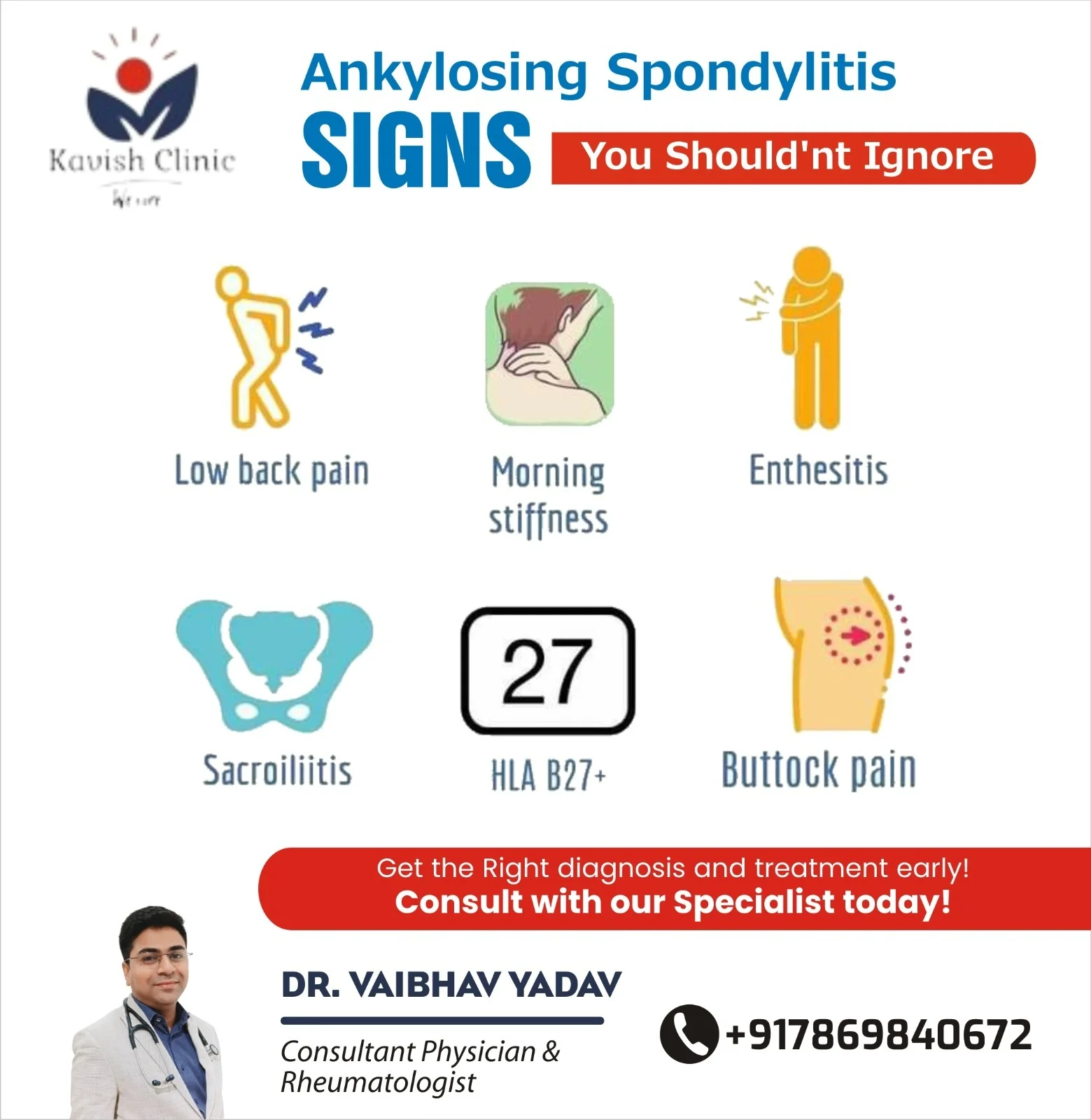
Common Signs of Ankylosing Spondylitis
Symptoms differ between individuals, but several patterns are commonly associated with inflammatory spinal disease.
1. Persistent Low Back Pain
One of the most recognizable symptoms is chronic lower back pain.
Unlike typical mechanical back pain, inflammatory pain may:
This pattern does not confirm ankylosing spondylitis by itself, but it is an important reason to seek medical assessment.
2. Morning Stiffness
People with ankylosing spondylitis may experience pronounced morning stiffness in the lower back or hips.
The stiffness may improve gradually after walking, stretching, or becoming active.
Persistent morning stiffness lasting a significant amount of time can help distinguish inflammatory pain from ordinary muscular discomfort.
3. Buttock Pain
Inflammation of the sacroiliac joints may produce deep pain in one or both buttocks.
The discomfort may alternate from one side to the other.
This symptom is particularly relevant when it occurs together with morning stiffness and prolonged lower back pain.
4. Sacroiliitis
Sacroiliitis refers to inflammation of one or both sacroiliac joints.
It can produce:
Imaging such as X-rays or MRI may sometimes be used when sacroiliitis is suspected.
5. Enthesitis
Enthesitis is inflammation where tendons or ligaments attach to bone.
In ankylosing spondylitis, it can occur around:
Repeated heel pain without a clear injury may deserve evaluation, particularly when other inflammatory symptoms are also present.
Is HLA-B27 Important?
HLA-B27 is a genetic marker associated with ankylosing spondylitis and related forms of spondyloarthritis.
However, an important point is that an HLA-B27 positive test does not automatically mean a person has ankylosing spondylitis.
Some healthy individuals carry HLA-B27 and never develop the disease. Conversely, some patients with ankylosing spondylitis may test negative.
Therefore, diagnosis is not based on a single blood test.
A rheumatologist in Indore considers HLA-B27 alongside symptoms, physical examination, imaging, inflammation markers, and family history.
Who Is at Higher Risk?
Ankylosing spondylitis often begins in younger adults, although diagnosis can occur later.
Factors associated with increased likelihood may include:
Having one of these factors does not necessarily mean that the condition is present.
How Is Ankylosing Spondylitis Diagnosed?
There is no single test that confirms every case.
For ankylosing spondylitis diagnosis in Indore, a rheumatologist may consider several pieces of information.
Medical History
The doctor may ask about:
Physical Examination
The examination may assess:
Blood Tests
Tests may include markers of inflammation such as ESR or CRP, along with HLA-B27 in selected cases.
Normal inflammatory markers do not always exclude the condition.
Imaging
X-rays can reveal structural changes in established disease.
MRI may detect active inflammation in the sacroiliac joints earlier than conventional X-rays in some patients.
Why Early Diagnosis Matters
Untreated inflammation can gradually contribute to persistent stiffness and reduced movement in some people.
Early ankylosing spondylitis care in Indore allows treatment to focus on controlling inflammation and maintaining physical function.
Timely management may help patients:
The course of the condition varies considerably, so regular monitoring is important.
Treatment Options for Ankylosing Spondylitis
Treatment is individualized rather than identical for every patient.
Medicines
Depending on symptoms and disease activity, a rheumatologist may consider medications intended to reduce pain and inflammation.
For patients with persistent active disease, advanced therapies may sometimes be recommended.
Medication choice depends on medical history, disease severity, associated conditions, and potential risks.
Prescription medicines should never be started, stopped, or changed without medical guidance.
Exercise and Physiotherapy
Movement is an important part of ankylosing spondylitis management.
A structured program may focus on:
Regular exercise can help reduce stiffness and preserve function.
However, the exercise program should suit the individual’s disease activity and physical ability.
Posture Management
Long-term stiffness can influence posture.
People with ankylosing spondylitis may benefit from paying attention to:
A physiotherapist may provide individualized advice where required.
Lifestyle Measures That May Support Management
Medical treatment remains central, but healthy lifestyle habits can support overall wellbeing.
These may include:
Smoking is particularly undesirable because ankylosing spondylitis can sometimes affect chest mobility, and tobacco use adds further cardiovascular and respiratory risks.
Can Ankylosing Spondylitis Affect Other Parts of the Body?
Yes. Although the spine is the primary area affected, ankylosing spondylitis is a systemic inflammatory condition.
Some patients may experience:
Eye Inflammation
Acute anterior uveitis can cause:
Sudden painful red eye with visual symptoms requires prompt medical assessment.
Hip or Shoulder Involvement
Large joints can sometimes become inflamed.
Bowel or Skin Associations
Some forms of spondyloarthritis are associated with inflammatory bowel disease or psoriasis.
This is one reason specialist follow-up should consider the whole patient rather than spinal pain alone.
When Should You Consult a Rheumatologist?
Consider seeing an ankylosing spondylitis doctor in Indore if you have:
Early rheumatology assessment can help determine whether symptoms represent inflammatory disease or another cause of back pain.
Frequently Asked Questions
1. Is ankylosing spondylitis curable?
It is generally considered a chronic inflammatory condition rather than one that can simply be permanently cured. However, appropriate treatment can help control disease activity, reduce symptoms, and preserve function for many patients.
2. Does HLA-B27 positive mean I definitely have ankylosing spondylitis?
No. HLA-B27 supports diagnosis when appropriate symptoms are present, but many people who carry the marker never develop ankylosing spondylitis. Diagnosis requires a broader clinical assessment.
3. Is exercise safe for ankylosing spondylitis?
Appropriate exercise is usually an important part of management. The type and intensity should be adapted to the patient's symptoms, mobility, disease activity, and overall health.
4. Which doctor treats ankylosing spondylitis?
A rheumatologist specializes in inflammatory arthritis and conditions such as ankylosing spondylitis. Physiotherapists and other specialists may also contribute to care depending on individual needs.
Get Timely Ankylosing Spondylitis Treatment in Indore
Persistent lower back pain, morning stiffness, sacroiliac discomfort, heel pain, or recurring buttock pain should not automatically be dismissed as routine muscular strain. When these symptoms follow an inflammatory pattern, rheumatology assessment can help identify the underlying cause and guide treatment.
Dr. Vaibhav Yadav provides consultation for ankylosing spondylitis, inflammatory arthritis, joint pain, and related rheumatological conditions at Kavish Clinic. A structured treatment plan can help control inflammation, preserve movement, and support long-term quality of life.
Contact Us Today to Book a Consultation for Ankylosing Spondylitis Treatment in Indore
| Tags: | #Ankylosing Spondylitis Treatment in Indore |


