
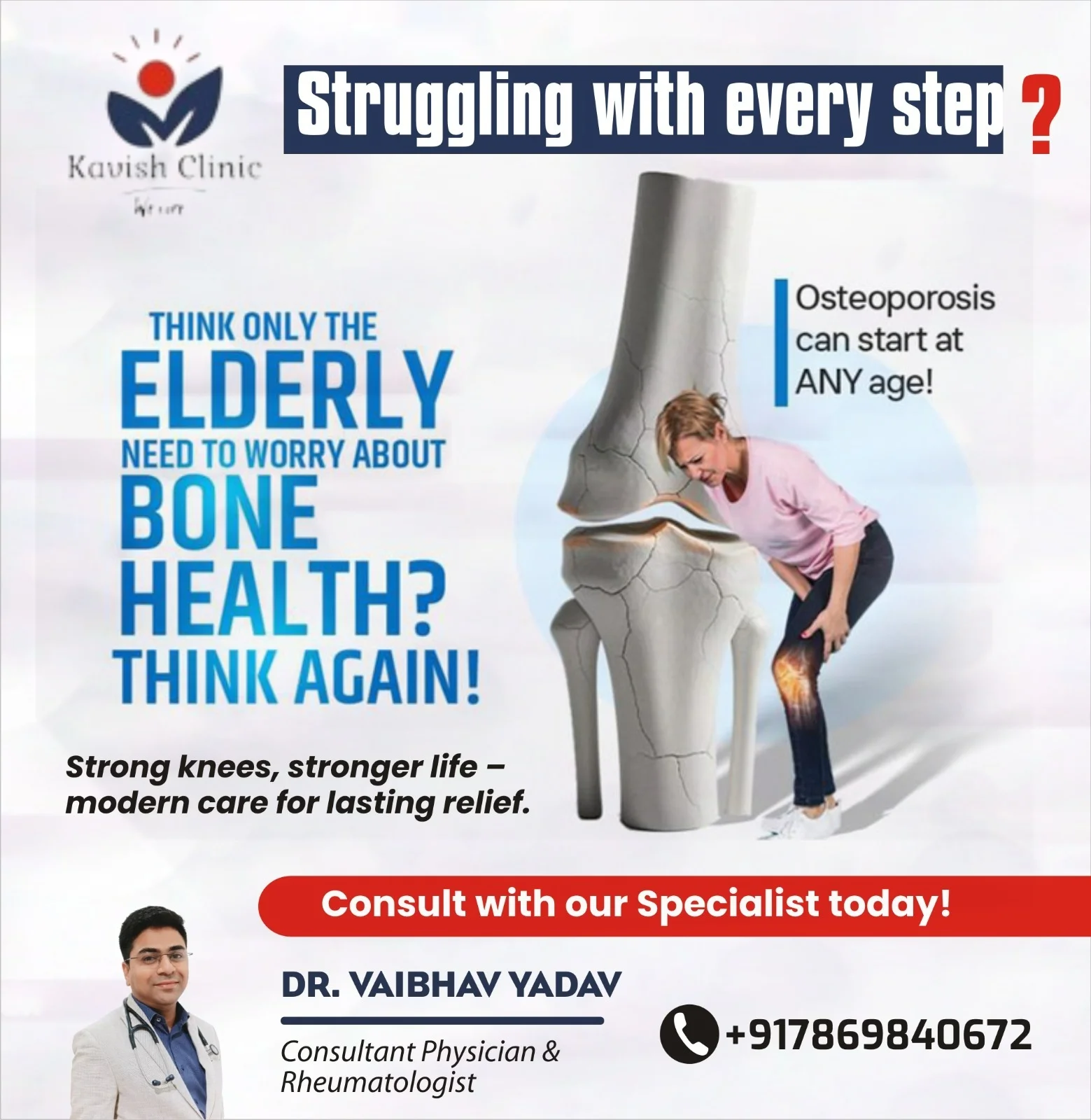
Strong bones are important at every stage of life—not only in old age. Osteoporosis can gradually weaken bones without causing obvious symptoms, which means many people may not realize there is a problem until a fracture occurs. The condition develops when bone density and bone strength decline, increasing the risk of fractures, particularly in the hip, wrist, and spine.
If you are experiencing repeated fractures, persistent back pain, loss of height, stooped posture, or have risk factors for weak bones, consulting an Osteoporosis Treatment Specialist in Indore can help you understand your bone health and take appropriate preventive or treatment measures.
Kavish Clinic offers consultation with Dr. Vaibhav Yadav for patients who need evaluation and management of osteoporosis and related rheumatological concerns. The focus is on identifying individual risk factors, assessing bone health, and developing a treatment plan suited to the patient's age, medical history, and fracture risk.
Osteoporosis is a condition in which bones become weaker and more fragile because of reduced bone mineral density and changes in bone structure. This makes fractures more likely, sometimes even after relatively minor falls or injuries.
Bone is living tissue that constantly undergoes renewal. Throughout life, old bone is broken down and new bone is formed. Osteoporosis can develop when bone loss occurs faster than new bone formation.
The condition is often called a "silent" bone disease because bone weakening can progress for years without noticeable symptoms.
No. Age is an important risk factor, but osteoporosis is not exclusively an elderly person's condition.
Bone health is influenced by several factors throughout life, including:
· Genetics
· Nutrition
· Hormonal changes
· Physical activity
· Chronic diseases
· Certain medications
· Smoking
· Alcohol consumption
· Calcium and vitamin D status
Younger adults can also develop low bone density or osteoporosis, particularly when they have underlying diseases, hormonal disorders, prolonged medication exposure, or significant nutritional deficiencies.
That is why bone health care in Indore should focus on risk assessment rather than age alone.
Osteoporosis often produces no clear warning signs before a fracture occurs.
A fracture caused by weakened bones can significantly affect mobility, independence, and quality of life. Fragility fractures commonly involve the hip, spine, wrist, and other bones.
Early assessment can help identify people who may benefit from:
· Lifestyle modification
· Bone density testing
· Calcium and vitamin D assessment
· Fall-prevention strategies
· Medication when clinically indicated
· Management of an underlying medical condition
The aim is not only to improve bone density but also to reduce the likelihood of future fractures.
Some people have a greater risk of osteoporosis than others.
Important risk factors can include:
Bone density generally decreases with age, making osteoporosis more common in older adults.
The decline in estrogen after menopause can accelerate bone loss in women.
A family history of osteoporosis or hip fracture can increase personal risk.
People with very low body weight may have lower bone mass and increased fracture risk.
Prolonged inactivity can contribute to bone loss and may also reduce strength and balance, increasing the likelihood of falls.
Smoking has been associated with increased osteoporosis and fracture risk.
Chronic heavy alcohol use is also recognized as a risk factor for osteoporosis.
Some chronic diseases, including rheumatoid arthritis and other medical conditions, can increase osteoporosis risk.
Certain medicines, particularly prolonged corticosteroid use, can contribute to bone loss in susceptible individuals.
Osteoporosis may remain unnoticed for a long time.
Once bones become significantly weakened, possible signs can include:
· Fractures after minor falls
· Back pain related to vertebral fractures
· Loss of height
· Changes in posture
· Reduced mobility after fracture
· Repeated fractures
However, symptoms alone are not enough to determine bone strength. Bone density testing may be required when a doctor suspects osteoporosis.
An osteoporosis specialist in Indore may begin with a detailed assessment of your medical history and risk factors.
Evaluation may include:
· Previous fractures
· Family history
· Diet
· Physical activity
· Smoking and alcohol history
· Current medicines
· Menopause history
· Existing medical conditions
· History of falls
NIAMS notes that osteoporosis evaluation commonly includes questions about previous fractures, lifestyle habits, diet, exercise, alcohol use, smoking, and current or past medical conditions.
A bone mineral density test, often performed using DXA or DEXA scanning, may be recommended to assess bone strength and help diagnose osteoporosis.
Your doctor may also recommend blood tests when an underlying nutritional, hormonal, or medical problem is suspected.
Osteoporosis may occur alongside rheumatological or autoimmune conditions.
For example, rheumatoid arthritis itself can be associated with increased osteoporosis risk, and some patients with inflammatory diseases may require medicines that can further affect bone strength.
Consulting a rheumatologist for osteoporosis in Indore can be particularly useful when weak bones occur alongside:
· Rheumatoid arthritis
· Long-term inflammatory disease
· Recurrent joint problems
· Long-term steroid use
· Autoimmune conditions
· Multiple unexplained fractures
A broader evaluation may help identify factors contributing to bone loss rather than focusing only on the bone density number.
Treatment depends on fracture risk, bone density, age, underlying health conditions, and other individual factors.
Calcium is essential for maintaining healthy bones, while vitamin D helps the body absorb calcium.
If dietary calcium intake is inadequate, the body may take calcium from bones, gradually weakening them over time.
Good dietary calcium sources may include:
· Milk
· Curd
· Paneer
· Calcium-fortified foods
· Certain leafy vegetables
· Other calcium-rich foods
Vitamin D can come from sunlight exposure, foods, and supplements when medically indicated.
Supplements should be taken according to professional advice rather than assuming that higher doses will produce stronger bones.
Appropriate physical activity plays an important role in maintaining bone and muscle health.
Depending on age and health condition, exercises may include:
· Walking
· Weight-bearing activities
· Resistance training
· Balance exercises
· Strengthening exercises
Physical activity can also improve strength and balance, which may help reduce fall risk.
Patients who already have osteoporosis or fractures should discuss safe exercise options before beginning intense workouts.
Some patients with osteoporosis or high fracture risk may need prescription medicines.
Treatment options can include medicines that slow bone loss or help increase bone formation. The selection depends on the patient's clinical condition and should be made by a qualified doctor. MedlinePlus notes that osteoporosis management may involve lifestyle changes, calcium and vitamin D, and medications when appropriate.
If osteoporosis is secondary to another medical condition, managing that condition is an important part of treatment.
Examples may include:
· Hormonal disorders
· Rheumatological disease
· Nutritional deficiencies
· Medication-related bone loss
Not every case is preventable, but many bone-health measures can reduce risk.
Useful habits include:
· Maintain adequate calcium intake
· Ensure appropriate vitamin D levels
· Stay physically active
· Include strength and balance exercises
· Avoid smoking
· Limit excessive alcohol consumption
· Maintain a healthy body weight
· Reduce fall hazards at home
· Discuss prolonged steroid use with your doctor
· Consider bone density testing if you have significant risk factors
Bone health should ideally be supported throughout adulthood rather than addressed only after a fracture.
Preventing fractures involves more than improving bone density.
People with weak bones may experience serious fractures from relatively minor falls.
Simple fall-prevention measures can include:
· Good lighting at home
· Removing loose rugs and obstacles
· Wearing suitable footwear
· Correcting vision problems
· Maintaining muscle strength
· Improving balance
· Using support devices when medically recommended
These measures can be particularly important for older adults with osteoporosis.
No. Osteoporosis and common joint conditions such as osteoarthritis are different.
Osteoporosis affects bone strength, while osteoarthritis primarily involves joint cartilage and surrounding structures.
A person can have both conditions at the same time.
Knee pain, stiffness, or difficulty walking should therefore not automatically be assumed to be caused by osteoporosis. A clinical evaluation can help determine whether the symptoms come from arthritis, injury, inflammatory disease, weak bones, or another musculoskeletal problem.
Consider medical evaluation if you:
· Have suffered a fracture after a minor fall
· Have experienced repeated fractures
· Have lost noticeable height
· Have a strong family history of osteoporosis
· Are taking long-term corticosteroid medicines
· Have rheumatoid arthritis or another chronic inflammatory disease
· Have undergone early menopause
· Have previously been told that your bone density is low
· Have significant osteoporosis risk factors
Early evaluation can help determine whether additional testing or preventive treatment is needed.
For patients looking for osteoporosis treatment in Indore, individualized assessment is essential. Age alone should not determine whether someone needs bone-health evaluation.
Kavish Clinic, under the consultation of Dr. Vaibhav Yadav, provides evaluation for osteoporosis and associated rheumatological conditions, helping patients understand their risk factors and available management options.
Yes. Although osteoporosis becomes more common with increasing age, younger adults can develop it because of certain diseases, medications, hormonal problems, nutritional deficiencies, or other risk factors.
Treatment can help strengthen bones, slow further bone loss, and reduce fracture risk, but the degree of improvement differs from person to person. The goal is usually long-term bone protection and fracture prevention.
No. Calcium requirements depend on diet, age, health condition, and individual needs. Calcium is important for bone health, but supplements should be used when appropriate rather than automatically.
Bone density testing may be recommended based on age, fracture history, medical conditions, medication use, and other osteoporosis risk factors. A doctor can determine whether testing is appropriate after evaluating your history.
Osteoporosis can progress quietly, which is why waiting for pain or a fracture is not the best approach for people at increased risk. Appropriate nutrition, physical activity, risk assessment, bone density testing when indicated, and medical treatment can all contribute to stronger long-term bone health.
If you are searching for an Osteoporosis Treatment Specialist in Indore, timely consultation can help you understand your bone strength, identify risk factors, and develop a personalized strategy to reduce future fracture risk.
Take bone health seriously at every age. If you have osteoporosis, recurrent fractures, long-term steroid use, inflammatory joint disease, or concerns about weakening bones, schedule a professional evaluation.
Contact Us today for expert guidance on osteoporosis treatment in Indore and take a proactive step toward stronger bones, safer movement, and better long-term mobility.
| Tags: | #Osteoporosis Treatment Specialist in Indore |


