
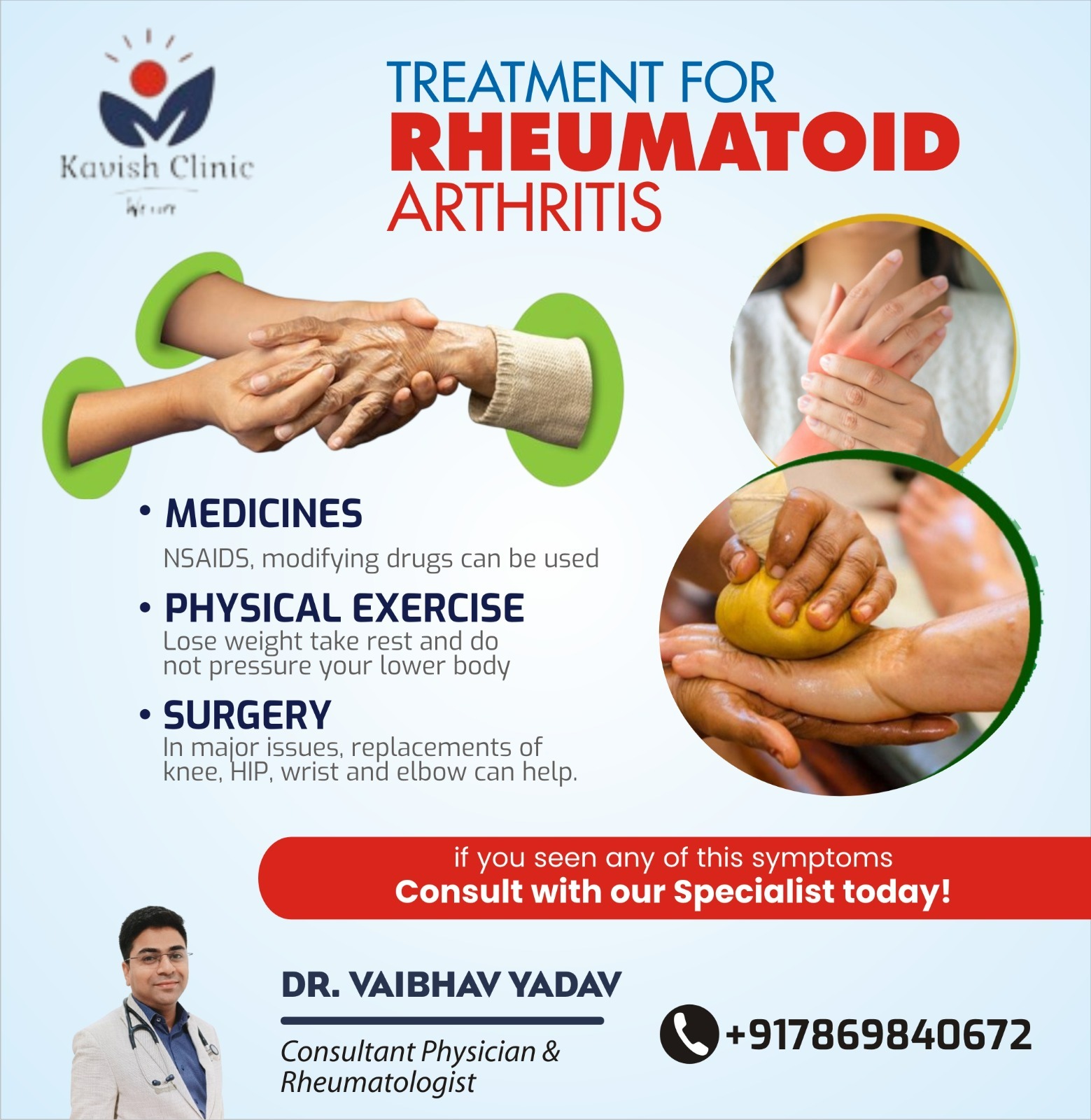
Rheumatoid Arthritis Treatment in Indore for Long-Term Joint Care
Rheumatoid arthritis is a chronic inflammatory condition that can cause joint pain, swelling, stiffness and difficulty performing everyday activities. It commonly affects the hands, wrists, feet and knees, although other joints and body systems may also be involved. Without timely evaluation, persistent inflammation may gradually reduce joint movement and affect a person’s independence.
People searching for professional Rheumatoid Arthritis Treatment in Indore can consult Dr. Vaibhav Yadav – Kavish Clinic for a detailed assessment and an individualised management plan based on symptoms, medical history, examination findings and relevant investigations.
Rheumatoid arthritis is an autoimmune condition. In an autoimmune disorder, the body’s defence system mistakenly attacks its own healthy tissues. In rheumatoid arthritis, this abnormal immune activity mainly affects the lining of the joints, resulting in inflammation.
Unlike temporary joint pain after physical activity, rheumatoid arthritis may continue for weeks or months. The condition can progress differently in each person. Some individuals experience mild symptoms, while others may develop frequent flare-ups and significant movement limitations.
Early rheumatoid arthritis diagnosis in Indore is important because treatment is generally more effective when inflammation is recognised and managed before extensive joint damage occurs.
Rheumatoid arthritis and osteoarthritis can both cause joint discomfort, but they are not the same condition.
Osteoarthritis is mainly associated with the gradual wearing down of joint cartilage. It commonly affects weight-bearing joints and may become more noticeable with age or repeated physical stress.
Rheumatoid arthritis develops because of immune-system-related inflammation. It may:
Correct diagnosis is necessary because the medicines and long-term management strategies used for these conditions are different.
Symptoms may begin gradually or appear within a shorter period. The intensity can also change over time.
Possible signs include:
People experiencing these concerns should consider a rheumatologist consultation in Indore, particularly when symptoms continue for several weeks or interfere with work and routine activities.
Many people experience mild stiffness after waking up, especially after a tiring day. However, stiffness related to inflammatory arthritis may continue for a longer period and improve gradually with movement.
Morning stiffness becomes more concerning when it is accompanied by:
The duration and pattern of stiffness can provide useful information during medical evaluation.
Rheumatoid arthritis can affect anyone, but certain factors may increase the likelihood of developing the condition.
These may include:
Having one or more risk factors does not confirm rheumatoid arthritis. A medical examination and appropriate testing are needed for diagnosis.
There is no single symptom that confirms the condition. Diagnosis is generally based on a combination of clinical examination, medical history and investigations.
During an arthritis specialist consultation in Indore, the doctor may ask:
The doctor may examine the joints for swelling, warmth, tenderness, range of movement and strength.
Blood investigations may help detect inflammation and immune-system-related markers. These results must be interpreted alongside the patient’s symptoms and physical findings.
X-rays, ultrasound or other imaging may be advised to assess joint condition, inflammation or structural changes. Imaging can also help monitor how the condition changes over time.
Some infections, vitamin deficiencies and other types of arthritis can produce similar symptoms. A complete evaluation helps avoid incorrect treatment.
The purpose of rheumatoid arthritis care in Indore is not limited to reducing pain temporarily. A comprehensive plan may aim to:
Treatment is personalised because symptom severity, affected joints, medical history and medicine response vary between individuals.
Different groups of medicines may be considered depending on the condition’s activity and the patient’s overall health.
Some medicines may provide short-term relief from pain and swelling. They can improve comfort but may not control the underlying immune activity responsible for rheumatoid arthritis.
Disease-modifying medicines are used to control the inflammatory process and reduce the risk of progressive joint damage. They may require regular monitoring through consultations and blood tests.
When standard treatment does not provide adequate control, the doctor may evaluate whether an advanced targeted therapy is appropriate.
Medicine selection should always be supervised by a qualified doctor. Patients should not increase, reduce or stop arthritis medicines independently, even when symptoms temporarily improve.
Rheumatoid arthritis may remain active even when pain feels less intense. Regular follow-up helps the doctor assess whether inflammation is adequately controlled.
Routine rheumatoid arthritis check-ups in Indore may include:
Patients should carry their previous prescriptions, blood reports and imaging records to follow-up appointments.
Rest is helpful during severe pain, but avoiding movement for long periods may increase stiffness and muscle weakness. A carefully selected activity programme can support joint function.
Exercises may focus on:
Physiotherapy recommendations should be based on the joints involved and the level of inflammation. Exercises that are suitable during a stable phase may need modification during an active flare.
A flare-up is a period when symptoms become more noticeable. Pain, swelling, stiffness and fatigue may increase during this time.
Helpful steps may include:
Sudden worsening should not be ignored, especially when there is high fever, severe weakness or one joint becomes extremely red and painful.
Lifestyle measures cannot replace medical treatment, but they can support overall well-being.
Excess weight increases pressure on the knees, hips and feet. Gradual weight management can reduce mechanical stress on these joints.
A varied diet containing vegetables, fruits, proteins, whole grains and suitable fats supports general health. Extreme diets and unverified arthritis cures should be avoided.
Smoking may worsen inflammatory disease activity and interfere with treatment response. Professional support can make quitting easier.
Use safe techniques while lifting, carrying or opening heavy objects. Avoid repeatedly placing unnecessary strain on painful joints.
Alternating work with short rest periods can help prevent exhaustion. Complete inactivity, however, may lead to reduced strength.
Poor sleep may increase fatigue and make pain feel more difficult to manage. A consistent sleep schedule can support recovery and emotional well-being.
Inflammatory joint problems may affect activities that previously felt simple, such as:
Early treatment and practical activity modifications can help people remain independent. Occupational guidance, supportive devices or ergonomic changes may also be useful for selected patients.
Arrange an early consultation when:
Seek urgent medical help for severe breathing difficulty, chest discomfort, sudden weakness, very high fever or a joint that becomes intensely red, hot and painful.
People looking for a rheumatoid arthritis doctor near me in Indore may seek accessible consultation from areas such as Vijay Nagar, Palasia, Bengali Square, Nipania, Mahalaxmi Nagar, Pipliyahana, Khajrana, Kanadia Road, Scheme No. 54, Scheme No. 78, LIG, Bhawarkuan, Rau and nearby parts of the city.
Selecting an accessible rheumatologist in Indore can make regular medicine reviews, blood-test monitoring and long-term follow-up more convenient.
Rheumatoid arthritis is generally managed as a long-term condition. Appropriate treatment can control inflammation, reduce symptoms and help protect joint function.
No. The outcome varies between patients. Early diagnosis, consistent treatment and regular monitoring can reduce the risk of progressive joint damage.
Suitable exercise is often helpful, but the type and intensity should match the condition’s activity. A physiotherapist or doctor can recommend appropriate movements.
In some patients, rheumatoid arthritis may affect other parts of the body. Regular medical follow-up is important for reviewing new symptoms and overall health.
Persistent swelling, prolonged morning stiffness and pain in multiple joints should not be treated only with temporary pain-relief measures. Early evaluation can help identify inflammatory arthritis and create a structured plan for protecting mobility and joint health.
For personalised Rheumatoid Arthritis Treatment in Indore, schedule a consultation with Dr. Vaibhav Yadav – Kavish Clinic. Receive an assessment-based treatment approach, medicine guidance and organised long-term monitoring.
Contact Us Today to Book Your Rheumatology Consultation in Indore.
| Tags: | #Rheumatoid Arthritis Treatment in Indore |


