
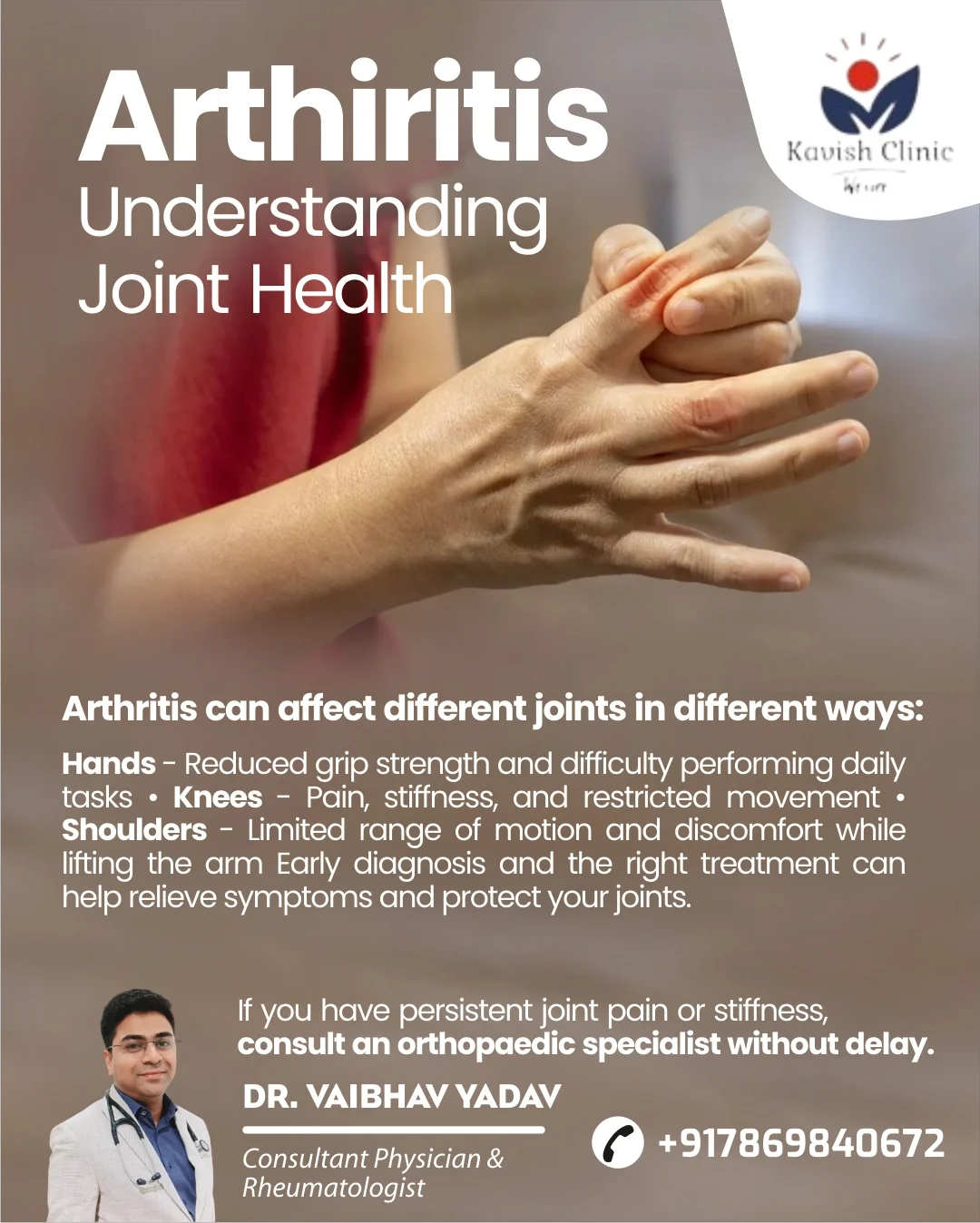
Opening a jar, getting up from a chair, or reaching for a shelf can become frustrating when your joints hurt. These everyday difficulties deserve attention, especially when stiffness or swelling keeps returning. Understanding the cause is the first step towards finding care that fits your needs.
The right approach to arthritis treatment in Indore starts with identifying the type of arthritis. Depending on the diagnosis, care may include prescribed medicines, suitable exercise, rehabilitation, and practical changes to daily activities. The aim is to ease symptoms, support movement, and, where possible, prevent further joint damage.
For a consultation, you can contact Kavish Clinic and discuss your symptoms with Dr. Vaibhav Yadav, Consultant Physician and Rheumatologist. Preparing a clear description of your difficulties helps make that conversation useful.
What Is Arthritis?
Arthritis describes a group of conditions affecting the joints. Pain, stiffness, and swelling can occur for different reasons, so two people with similar symptoms may need different treatment.
Osteoarthritis
Osteoarthritis involves changes within the joint, including damage to the protective cartilage covering the ends of bones. It commonly affects the knees, hips, and small hand joints. Symptoms may become more noticeable during activity, although their severity varies.
Rheumatoid Arthritis
Rheumatoid arthritis is an autoimmune condition in which the immune system mistakenly attacks healthy tissue, particularly the joint lining. It can cause swelling, prolonged stiffness, fatigue, and difficulty with everyday tasks. Early assessment matters because ongoing inflammation can damage joints.
Gout
Gout develops when urate crystals accumulate around a joint, triggering inflammation. An attack may bring sudden, intense pain and swelling. Although the big toe is a familiar location, other joints can be affected.
These examples explain why choosing treatment from a symptom alone can be misleading.
How Arthritis Can Affect Everyday Movement
Hands: When Gripping Becomes Difficult
With hand arthritis, turning a key, fastening buttons, or holding a cup may become uncomfortable. Pain around the thumb can interfere with pinching and gripping. Tell your doctor which tasks have changed; “I cannot open a bottle comfortably” is more helpful than simply saying your hand feels weak.
Knees: When Ordinary Journeys Feel Harder
Knee arthritis can make walking, using stairs, or rising from a seated position painful. You may notice stiffness after resting or feel that your usual walking distance has become shorter. Record these changes so the assessment includes how symptoms affect your independence.
Shoulders: When Reaching Is Restricted
Shoulder arthritis may cause pain and reduced movement when lifting an arm, washing your hair, or reaching overhead. However, shoulder discomfort can also come from tendons and other nearby structures. An examination helps distinguish joint disease from these alternatives.
When Should You Seek Medical Advice?
Arrange an assessment when joint symptoms persist, repeatedly return, or interfere with normal activities. Changes worth discussing include:
You do not need to wait until the pain becomes unbearable. Explaining a gradual loss of function can be just as important as describing severe discomfort.
A Suddenly Hot, Swollen Joint Needs Urgent Attention
Seek urgent medical assessment for sudden severe joint pain with heat, swelling, or difficulty moving the joint or bearing weight. Fever or feeling unwell makes the situation especially concerning, but fever may be absent. A joint infection is one possible cause and requires prompt treatment. Avoid assuming that a new episode is simply another arthritis flare.
What Happens During an Arthritis Assessment?
A useful consultation begins with your story: when symptoms started, which joints are involved, and what makes daily life difficult. The clinician may examine swelling, tenderness, movement, and physical function.
Blood tests or imaging may be recommended when they can clarify the suspected condition. There is no single blood test that definitively proves or excludes rheumatoid arthritis; results must be interpreted alongside symptoms and examination findings.
Ask what each suggested investigation is intended to answer. For example, is it looking for inflammation, checking joint changes, or excluding another explanation? Understanding the purpose of testing helps you follow the next steps with greater confidence.
Treatment Should Match the Diagnosis
Medicines With a Clear Purpose
Pain relief and control of the underlying disease serve different roles. Some medicines ease discomfort or inflammation, while disease-modifying medicines used for inflammatory arthritis can help limit disease progression.
For gout, treatment for an acute attack differs from long-term treatment intended to lower uric acid and reduce future attacks. Your doctor will decide which approach is appropriate.
Ask about the expected benefits, possible side effects, and any monitoring required. Share details of other medicines and supplements before starting additional products.
Exercise and Rehabilitation
Appropriate exercise can strengthen muscles supporting the joints and improve function. For osteoarthritis, a programme may combine strengthening with activities that build general fitness. A physiotherapist can help tailor movements to your abilities.
Start gradually rather than copying an intense online routine. During an inflammatory flare, the balance between activity and rest may need adjustment. Stop an activity that produces severe pain or makes a joint hot and swollen, and seek guidance about a suitable alternative.
Practical Support for Daily Tasks
An occupational therapist may suggest ways to make activities easier, such as adapted handles or assistive equipment. Depending on your assessment, a support or splint may also have a role.
Choose a meaningful goal to discuss: fastening clothes, preparing meals, or walking comfortably to a nearby shop. Treatment becomes easier to evaluate when improvement relates to something you actually want to do.
Build Habits That Fit Your Routine
Daily management works best when it is realistic. Consider these ideas alongside your clinician’s advice:
A food plan or home remedy should not replace necessary treatment. Ask before adding supplements, particularly if you already take prescription medicines.
Planning Arthritis Care in Indore, Madhya Pradesh
When choosing a rheumatologist in Indore, look for clear explanations, a diagnosis-led plan, and a practical approach to follow-up. Rheumatologists assess inflammatory joint conditions and help coordinate ongoing medical care.
Before an appointment in Vijay Nagar, confirm the location, consultation availability, and arrangements for any recommended tests. Bring previous reports, a medication list, and a few notes about your symptoms.
Write down your main questions beforehand. You might ask how the diagnosis was reached, what improvement to expect, and when to return. Follow-up allows the clinician to review treatment response, check for side effects, and adjust care when necessary.
Frequently Asked Questions
1. Can arthritis be cured permanently?
There is no universal permanent cure. Osteoarthritis and rheumatoid arthritis usually need ongoing management, although symptoms can improve and inflammatory disease may reach remission. The outlook depends on the diagnosis and response to treatment.
2. Does arthritis always require surgery?
No. Many people receive treatment through medicines, exercise, rehabilitation, and daily adjustments. Surgery may be considered in selected cases when joint damage or continuing symptoms significantly affect function despite other appropriate care.
3. Can younger adults develop arthritis?
Yes. Arthritis is not limited to older people. Autoimmune conditions such as rheumatoid arthritis can affect younger adults, so persistent swelling or stiffness should not be dismissed because of age.
4. Should I get blood tests before my first appointment?
Usually, it is more useful to let the clinician assess your symptoms and choose relevant investigations. Bring existing reports, but avoid arranging a broad test package without knowing what clinical question it needs to answer.
Take the First Step Towards Easier Movement
If recurring joint pain is changing your routine, seek an assessment and a clear explanation of your options. Contact Kavish Clinic to arrange a consultation with Dr. Vaibhav Yadav and discuss an appropriate plan for joint pain treatment in Indore.
Bring your questions, describe your goals, and take an informed step towards managing your joint health.
Contact Us Today.
Best Rheumatologist in Indore | Doctor for Psoriatic arthritis Treatment in Indore | Best Doctor for Hypertension Treatment in Indore | Best Rheumatology Services In Indore | Best Rheumatologist For Rheumatoid Arthritis Treatment In Indore | Best Rheumatologist For Low Backache Treatment In Indore | Best Rheumatologist For Ankylosing spondylitis Treatment in Indore | Best Rheumatologist For SLE Treatment In Indore | Best Rheumatologist For Lupus Nephritis Treatment In Indore | Best Rheumatologist For Scleroderma Treatment In Indore | Best Rheumatologist For Psoriatic arthritis Treatment In Indore | Best Doctor For Fibromyalgia Treatment In Indore | Osteoarthritis Treatment Specialist In Indore | Best Osteoporosis Treatment Specialist in Indore | Juvenlice Inflammatory Arthritis Treatment In Indore | Sjogren syndrome Specialist Near Me In Indore | Best Inflammatory myositis Treatment In Indore | Best Bechets Disease Treatment In Indore | Best Diabetologist in Indore | Best Diabetes Treatment Services in Indore | Doctor For Type I Diabetes Treatment In Indore | Doctor For Type II Diabetes Treatment In Indore | Best Pancreatic Diabetes Treatment In Indore | Best Pregnancy Inducted Diabetes Treatment In Indore | Best Doctor For Hypertension Treatment In Indore | Best Primary Hypertension Specialist In Indore | Best Secondary Hypertension Doctor in Indore | Best Thyroid Disorders Treatment In Indore | Best Hypothyroidsm Specialist Near Me In Indore | Hyperthyroidism Specialist Near Me In Indore | Thyroid Specialist in Indore
| Tags: | #Arthritis Treatment in Indore |


