
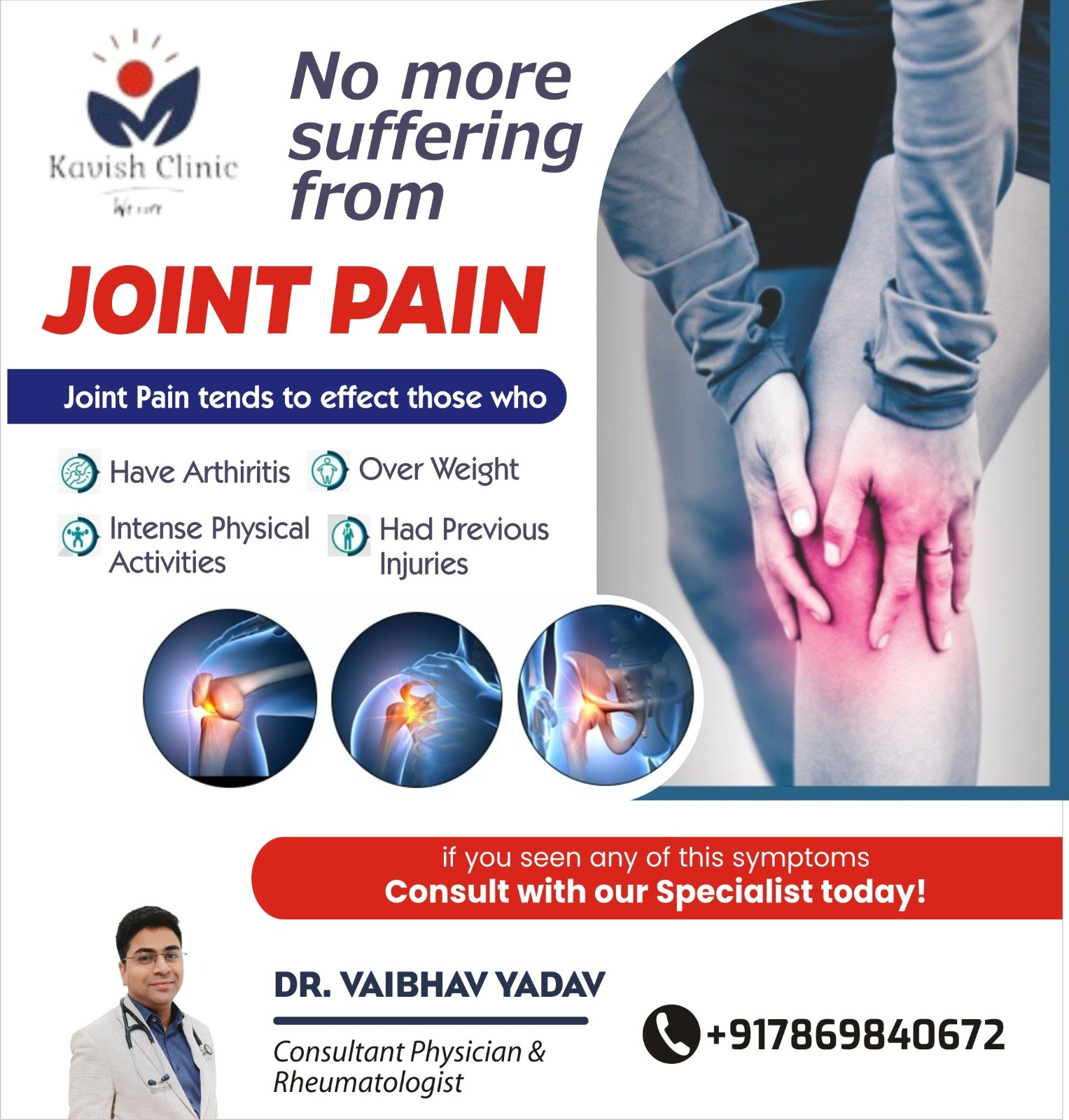
Joint Pain Treatment in Indore
Joint pain can affect your daily life, movement, work routine, sleep, and overall comfort. Whether the pain is in the knee, shoulder, wrist, ankle, fingers, hip, or multiple joints, ignoring it for a long time can make the condition more difficult to manage. If you are searching for Joint Pain Treatment in Indore, proper diagnosis and timely care can help identify the real cause behind pain, stiffness, swelling, and reduced mobility. For patients dealing with arthritis, autoimmune joint problems, swelling, and long-term joint discomfort, Dr. Vaibhav Yadav at Kavish Clinic provides focused consultation and treatment guidance.
Many people think joint pain is only due to age or weakness, but this is not always true. Joint pain can happen due to injury, inflammation, infection, arthritis, autoimmune disease, overuse, vitamin deficiency, lifestyle habits, or metabolic conditions like gout. Some joint problems may be temporary, while others may need long-term medical care.
If joint pain comes with swelling, morning stiffness, redness, warmth, fever, or difficulty in movement, it should be checked by a specialist. Early consultation helps prevent worsening of symptoms and supports better long-term joint health.
People searching for Joint Pain Treatment in Indore usually need relief from pain, stiffness, swelling, and movement difficulty. The right treatment depends on the cause of the pain. A rheumatology-focused consultation may include clinical examination, medical history, blood tests, imaging reports, and lifestyle assessment.
The goal of treatment is not just temporary pain relief. The main focus is to understand the root cause, reduce inflammation, protect joints, improve mobility, and help patients return to daily activities with better comfort.
Joint pain can occur in one joint or multiple joints. The cause may be mechanical, inflammatory, autoimmune, infectious, or lifestyle-related.
Osteoarthritis is commonly linked with wear and tear of joints. It often affects knees, hips, hands, and spine. Symptoms may include pain while walking, stiffness, swelling, and reduced movement.
Rheumatoid arthritis is an autoimmune condition where the immune system affects the joints. It may cause pain, swelling, warmth, stiffness, and discomfort in multiple joints, often on both sides of the body.
Gout can cause sudden, severe joint pain, commonly in the big toe, ankle, knee, or other joints. It is linked with high uric acid levels and may cause redness, swelling, and intense tenderness.
Sports injuries, falls, repetitive work, heavy lifting, or poor posture may lead to joint strain, ligament injury, tendon pain, or cartilage-related problems.
Conditions like lupus, psoriatic arthritis, ankylosing spondylitis, reactive arthritis, and other inflammatory disorders can also cause joint pain and stiffness.
Sometimes joint pain may occur after viral fever, bacterial infection, or other illnesses. If pain is severe or persistent, medical evaluation is important.
Joint pain should be evaluated if it affects routine activities or continues for more than a few days.
· Persistent joint pain
· Swelling in one or more joints
· Morning stiffness lasting longer than usual
· Redness or warmth around the joint
· Difficulty walking, gripping, bending, or climbing stairs
· Pain in multiple joints
· Sudden severe pain
· Joint deformity
· Fever with joint pain
· Pain after injury or fall
· Repeated flare-ups
· Reduced range of motion
These signs may indicate inflammation, arthritis, injury, or another medical condition that needs timely care.
Joint pain can affect different areas of the body, and each location may indicate a different problem.
Knee pain is common in adults and elderly people. It may happen due to osteoarthritis, obesity, injury, ligament strain, gout, or inflammatory arthritis. Knee pain can make walking, sitting, standing, and climbing stairs difficult.
Shoulder pain may occur due to frozen shoulder, rotator cuff problems, arthritis, injury, or inflammation. It can affect daily tasks like lifting objects, wearing clothes, or sleeping on one side.
Hip pain may be related to arthritis, injury, muscle strain, inflammation, or spine-related issues. Proper diagnosis helps differentiate hip joint pain from back-related pain.
Pain in fingers, wrist, or hand joints may be seen in rheumatoid arthritis, osteoarthritis, gout, or repetitive strain. Swelling and stiffness in small joints should not be ignored.
A rheumatologist focuses on joint pain related to arthritis, autoimmune diseases, inflammation, swelling, and long-term stiffness. Many patients take painkillers repeatedly without understanding the cause. This may give short-term relief but does not address the root problem.
A specialist consultation helps identify whether the pain is due to mechanical wear, inflammatory arthritis, gout, autoimmune disease, or another condition. This is especially important when joint pain affects multiple joints or comes with swelling and morning stiffness.
Diagnosis may vary from patient to patient. A doctor may ask about pain duration, affected joints, swelling, stiffness timing, family history, fever, skin changes, lifestyle, and previous treatment.
· Physical examination
· Joint movement assessment
· Blood tests for inflammation markers
· Uric acid test
· Rheumatoid factor or autoimmune markers when needed
· X-ray, ultrasound, or MRI if required
· Review of previous medical reports
· Medication and lifestyle history
Accurate diagnosis helps create a personalized treatment plan.
Treatment depends on the exact cause and severity. Not every joint pain needs the same medicine or procedure. Some patients need short-term treatment, while others may need long-term disease management.
· Medicines to reduce pain and inflammation
· Disease-specific medicines for autoimmune arthritis
· Gout management and uric acid control
· Physiotherapy and mobility exercises
· Lifestyle and weight management guidance
· Heat or cold therapy advice
· Joint protection techniques
· Diet and activity modification
· Regular monitoring for chronic conditions
· Follow-up care to prevent flare-ups
Self-medication should be avoided, especially if pain is recurring or associated with swelling.
Daily habits play an important role in joint comfort and mobility. Along with medical care, small lifestyle changes can support better outcomes.
· Maintain a healthy body weight
· Do regular low-impact exercise
· Avoid sitting in one position for long hours
· Use proper posture while working
· Avoid sudden heavy lifting
· Wear comfortable footwear
· Follow a balanced diet
· Stay hydrated
· Do stretching under guidance
· Do not ignore repeated pain or swelling
· Take medicines only as advised
Healthy routines can reduce stress on joints and support better movement.
Joint pain is not only an elderly problem. Young adults may experience joint pain due to sports injuries, autoimmune arthritis, posture issues, gym injuries, vitamin deficiency, or inflammatory conditions. If a young person has repeated swelling, morning stiffness, back stiffness, or pain in multiple joints, early evaluation is important.
Timely treatment can prevent joint damage and improve long-term quality of life.
In older adults, joint pain is often linked with osteoarthritis, reduced cartilage support, muscle weakness, or age-related changes. However, inflammatory arthritis and gout can also affect elderly patients. A proper diagnosis helps decide whether the patient needs medicines, exercises, physiotherapy, or long-term joint care guidance.
Some symptoms need urgent medical attention. If joint pain starts suddenly after injury, the joint looks deformed, the pain is severe, or there is sudden swelling, immediate evaluation is advised. Fever with a swollen joint should also be taken seriously.
Ignoring these signs may delay treatment and increase complications.
Choosing local joint pain care in Indore makes consultation, follow-up, testing, and long-term monitoring more convenient. Patients with arthritis or inflammatory joint problems often need regular review to adjust treatment and monitor improvement.
For people searching for dependable Joint Pain Treatment in Indore, Dr. Vaibhav Yadav at Kavish Clinic offers patient-focused guidance for arthritis, gout, swelling, stiffness, and autoimmune joint conditions.
You should visit a doctor if joint pain lasts for several days, comes with swelling, redness, warmth, fever, stiffness, or affects walking, working, or daily activities.
No, every joint pain is not arthritis. Joint pain can also happen due to injury, overuse, infection, gout, vitamin deficiency, or autoimmune conditions. Proper diagnosis is necessary.
Many joint pain conditions can be managed with medicines, physiotherapy, lifestyle changes, exercise guidance, and disease-specific treatment. Surgery is not required in every case.
Morning stiffness may be seen in inflammatory arthritis or autoimmune joint conditions. If stiffness lasts for a long time or occurs with swelling, consult a specialist.
Joint pain can affect movement, confidence, sleep, and daily productivity. Early diagnosis and proper treatment can help manage pain, reduce inflammation, improve flexibility, and protect joints from long-term damage. If you are experiencing knee pain, shoulder pain, hand stiffness, swelling, gout symptoms, or multiple joint pain, do not rely only on temporary pain relief.
For expert Joint Pain Treatment in Indore, Contact Us Today and take the right step toward better joint health and comfortable movement.
Best Rheumatologist in Indore | Doctor for Psoriatic arthritis Treatment in Indore | Best Doctor for Hypertension Treatment in Indore | Best Rheumatology Services In Indore | Best Rheumatologist For Rheumatoid Arthritis Treatment In Indore | Best Rheumatologist For Low Backache Treatment In Indore | Best Rheumatologist For Ankylosing spondylitis Treatment in Indore | Best Rheumatologist For SLE Treatment In Indore | Best Rheumatologist For Lupus Nephritis Treatment In Indore | Best Rheumatologist For Scleroderma Treatment In Indore | Best Rheumatologist For Psoriatic arthritis Treatment In Indore | Best Doctor For Fibromyalgia Treatment In Indore | Osteoarthritis Treatment Specialist In Indore | Best Osteoporosis Treatment Specialist in Indore | Juvenlice Inflammatory Arthritis Treatment In Indore | Sjogren syndrome Specialist Near Me In Indore | Best Inflammatory myositis Treatment In Indore | Best Bechets Disease Treatment In Indore | Best Diabetologist in Indore | Best Diabetes Treatment Services in Indore | Doctor For Type I Diabetes Treatment In Indore | Doctor For Type II Diabetes Treatment In Indore | Best Pancreatic Diabetes Treatment In Indore | Best Pregnancy Inducted Diabetes Treatment In Indore | Best Doctor For Hypertension Treatment In Indore | Best Primary Hypertension Specialist In Indore | Best Secondary Hypertension Doctor in Indore | Best Thyroid Disorders Treatment In Indore | Best Hypothyroidsm Specialist Near Me In Indore | Hyperthyroidism Specialist Near Me In Indore | Thyroid Specialist in Indore
| Tags: | #Joint Pain Treatment in Indore |


