
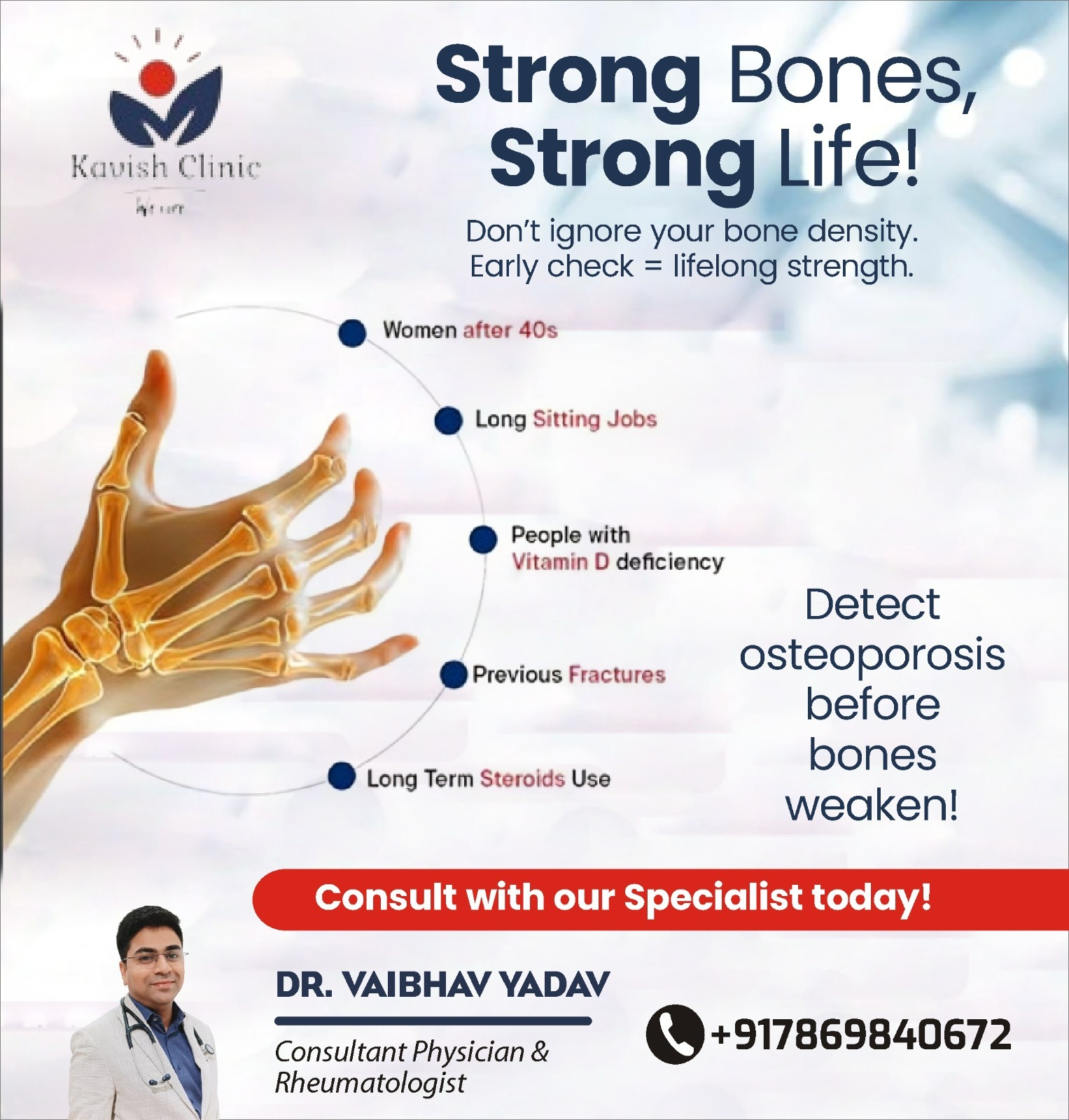
Osteoporosis Specialist in Indore: Early Diagnosis and Treatment for Stronger Bones
Healthy bones provide strength, stability and freedom of movement throughout life. However, bone density can gradually decline without producing obvious warning signs. Many people discover that their bones have weakened only after a fracture caused by a minor fall, sudden movement or everyday physical stress.
Osteoporosis is a condition in which bone mass and bone strength decrease, making fractures more likely. It commonly affects the hip, spine and wrist, although any bone can be involved. Because the condition may progress silently, timely assessment by an Osteoporosis Specialist in Indore can help identify risk factors, evaluate bone health and create an appropriate management plan.
Kavish Clinic provides specialist consultation for people concerned about low bone density, recurrent fractures, vitamin D deficiency and other conditions that may affect bone strength in Indore, Madhya Pradesh.
What Is Osteoporosis?
Osteoporosis is a bone disease that develops when bone mineral density and bone mass decrease or when the internal structure of bone changes. As a result, bones become weaker and more likely to fracture.
Bones are living tissues. The body continuously removes old bone and replaces it with new bone. During childhood and early adulthood, bone formation generally occurs efficiently. As people grow older, the rate of bone loss may begin to exceed the rate of replacement.
A person can have osteoporosis without experiencing pain or visible symptoms. This is why it is often described as a silent disease. In some cases, a fracture may be the first noticeable sign.
Osteopenia and Osteoporosis: What Is the Difference?
Osteopenia means that bone density is lower than expected but has not reached the level typically used to diagnose osteoporosis. It may indicate an increased risk of future bone weakening.
Osteoporosis represents more significant loss of bone strength and a higher risk of fractures.
Not every person with osteopenia will develop osteoporosis. Risk depends on several factors, including:
A bone specialist in Indore can interpret test results together with a person’s complete medical history rather than relying on a single number.
Why Osteoporosis Often Goes Undetected
Unlike many joint or muscle conditions, early osteoporosis usually does not cause swelling, stiffness or constant pain. The bones may continue to weaken while the person feels completely normal.
Possible later signs can include:
Persistent back pain does not automatically mean osteoporosis, and osteoporosis does not always cause back pain. Medical evaluation is necessary to identify the actual cause.
Who Is at Greater Risk of Osteoporosis?
Osteoporosis can affect both women and men, although certain people have a higher likelihood of developing it.
Women After Menopause
The decline in oestrogen after menopause can accelerate bone loss. Women who experience early menopause may require earlier assessment, particularly when other risk factors are present.
Older Adults
Bone density generally decreases with age. Older adults are also more likely to experience falls, which further increases fracture risk.
People with Previous Fragility Fractures
A fracture resulting from a minor fall or low-impact event may indicate reduced bone strength. A previous fracture after middle age is an important reason to discuss bone-density assessment with a doctor.
People Taking Steroids for a Long Time
Long-term use of glucocorticoid medicines can contribute to bone loss. Patients taking steroids for inflammatory, respiratory, autoimmune or other medical conditions should not stop them independently, but they may need bone-health monitoring.
People with Low Vitamin D or Calcium Intake
Vitamin D supports calcium absorption, while calcium is an important component of bone. Deficiency or inadequate intake may contribute to poor bone health, although supplements should be taken according to individual requirements rather than without assessment.
People with Limited Physical Activity
Prolonged inactivity, extended bed rest and a sedentary lifestyle can reduce the mechanical stimulation needed to maintain healthy bones and muscles.
People with Certain Medical Conditions
Bone loss may be associated with conditions affecting hormones, digestion, kidneys, liver, blood or the immune system. Examples may include:
The presence of one of these conditions does not confirm osteoporosis, but it may justify a risk assessment.
When Should You Consult an Osteoporosis Doctor?
Consider seeing an osteoporosis doctor in Indore when:
Sudden severe back pain, inability to walk after a fall, visible deformity or suspected hip fracture requires urgent medical evaluation.
How Is Osteoporosis Diagnosed?
Diagnosis generally combines risk assessment, physical examination, medical history and suitable investigations.
Medical History
The doctor may ask about:
Physical Examination
The examination may include assessment of posture, height, walking pattern, muscle strength, spinal tenderness, balance and mobility.
Bone Mineral Density Test
A DXA or DEXA scan is a low-dose X-ray test that measures bone mineral density. It is commonly used to evaluate the hip and spine and can help diagnose bone loss and estimate fracture risk.
The report commonly provides:
The results should be interpreted alongside the patient’s age, medical history, fracture history and other clinical factors.
Blood and Urine Tests
Selected tests may be recommended to identify conditions contributing to bone loss. These can include evaluation of vitamin D, calcium, kidney function, thyroid function or other relevant parameters.
A routine calcium blood test alone cannot determine how much calcium is present in the bones. Bone density requires a separate assessment such as a DXA scan.
Spine Imaging
When a vertebral fracture is suspected, the doctor may recommend an X-ray or other imaging. Some spinal fractures can occur without a major accident and may present as back pain or height loss.
Osteoporosis Treatment in Indore
The goals of treatment are to slow bone loss, preserve bone strength and reduce the likelihood of fractures. Management may include nutrition, exercise, fall prevention, treatment of contributing conditions and medication when clinically appropriate.
Medication
Several categories of medicines may be considered depending on:
Patients should not begin, stop or switch osteoporosis medicine without medical guidance. Each treatment has a specific method of administration, potential benefits and possible risks.
Calcium and Vitamin D
Adequate calcium and vitamin D are important for bone health, but requirements vary. Food sources may contribute significantly, while supplements may be recommended when intake or blood levels are insufficient.
Taking excessive supplements without medical advice may not provide additional benefit and can be unsuitable for some people.
Weight-Bearing Exercise
Activities that make the body work against gravity can support bone and muscle health. Depending on ability and fracture risk, examples may include:
People with severe osteoporosis, vertebral fractures or significant balance problems should seek professional advice before beginning a demanding exercise routine.
Fall Prevention
Reducing falls is especially important because weak bones fracture more easily.
Helpful measures may include:
Management of Underlying Conditions
When bone loss is linked to another disease or medicine, the treatment plan may include addressing that factor alongside osteoporosis care.
Food and Lifestyle Habits for Better Bone Health
Daily habits cannot replace medical treatment when osteoporosis is established, but they can support overall bone and muscle health.
Eat a Balanced Diet
Include suitable sources of:
A balanced dietary pattern is more useful than relying on a single food or supplement.
Maintain a Healthy Body Weight
Being significantly underweight can increase the likelihood of bone loss and fractures. Sudden or restrictive weight-loss diets may also affect muscle strength and nutritional intake.
Avoid Tobacco
Smoking can negatively affect bone health and may interfere with healing after fractures.
Limit Excessive Alcohol
Frequent heavy alcohol use can increase the risk of bone loss and falls.
Stay Physically Active
Regular activity supports muscles, balance and coordination. Stronger muscles can also make everyday movement safer.
Get Safe Sun Exposure
Sunlight helps the body produce vitamin D, but exposure needs vary according to skin type, season, clothing, lifestyle and health. A blood test may be needed when deficiency is suspected.
Osteoporosis in Men
Osteoporosis is sometimes mistakenly considered only a women’s condition. Men can also develop significant bone loss, particularly with ageing, low hormone levels, long-term steroid use, smoking, heavy alcohol use or chronic illness.
Men may be diagnosed later because they are less likely to consider themselves at risk. Previous low-impact fractures, height loss and long-term medicine use should not be ignored.
Osteoporosis and Rheumatic Diseases
Certain inflammatory rheumatic conditions may affect bone health through persistent inflammation, reduced activity and long-term medicine use. Patients with rheumatoid arthritis or similar disorders may require attention to both the primary disease and fracture risk.
A rheumatologist for osteoporosis in Indore can evaluate how inflammation, medicines and general health may be contributing to bone weakness.
Why Follow-Up Is Important
Osteoporosis care is usually a long-term process. Follow-up appointments help the doctor:
A repeated DXA scan is not always required after a short interval. The timing should be based on treatment type, clinical risk and the doctor’s recommendation.
Kavish Clinic offers consultation with Dr. Vaibhav Yadav for patients seeking assessment and management of osteoporosis, low bone density and related rheumatological concerns in Indore MP.
Frequently Asked Questions
1. Can osteoporosis be completely cured?
Osteoporosis can often be managed effectively, but the outcome depends on its cause, severity and fracture history. Treatment aims to protect bone strength and lower future fracture risk.
2. Is vitamin D deficiency the same as osteoporosis?
No. Vitamin D deficiency may affect bone health, but osteoporosis is diagnosed through a broader evaluation that may include bone-density testing, fracture history and other clinical factors.
3. Does osteoporosis always cause bone pain?
No. Osteoporosis commonly develops without symptoms. Pain may occur after a fracture, particularly in the spine, hip or wrist.
4. Can young adults develop osteoporosis?
Yes, although it is less common. Younger adults may develop low bone density because of chronic illness, hormonal problems, nutritional deficiencies, long-term steroid use or other secondary causes.
Take Action Before a Fracture Happens
Weak bones may not produce an early warning, but risk factors can often be recognised before a major injury occurs. A previous fracture, long-term steroid treatment, menopause, height loss or persistent vitamin D deficiency should be discussed with an appropriate specialist.
For personalised evaluation by an Osteoporosis Specialist in Indore, schedule a consultation and bring your previous prescriptions, fracture records, blood reports and bone-density scans.
Contact Us today to arrange a bone-health assessment and take a proactive step towards stronger bones, safer movement and greater long-term independence.
| Tags: | #Osteoporosis Specialist in Indore |


