
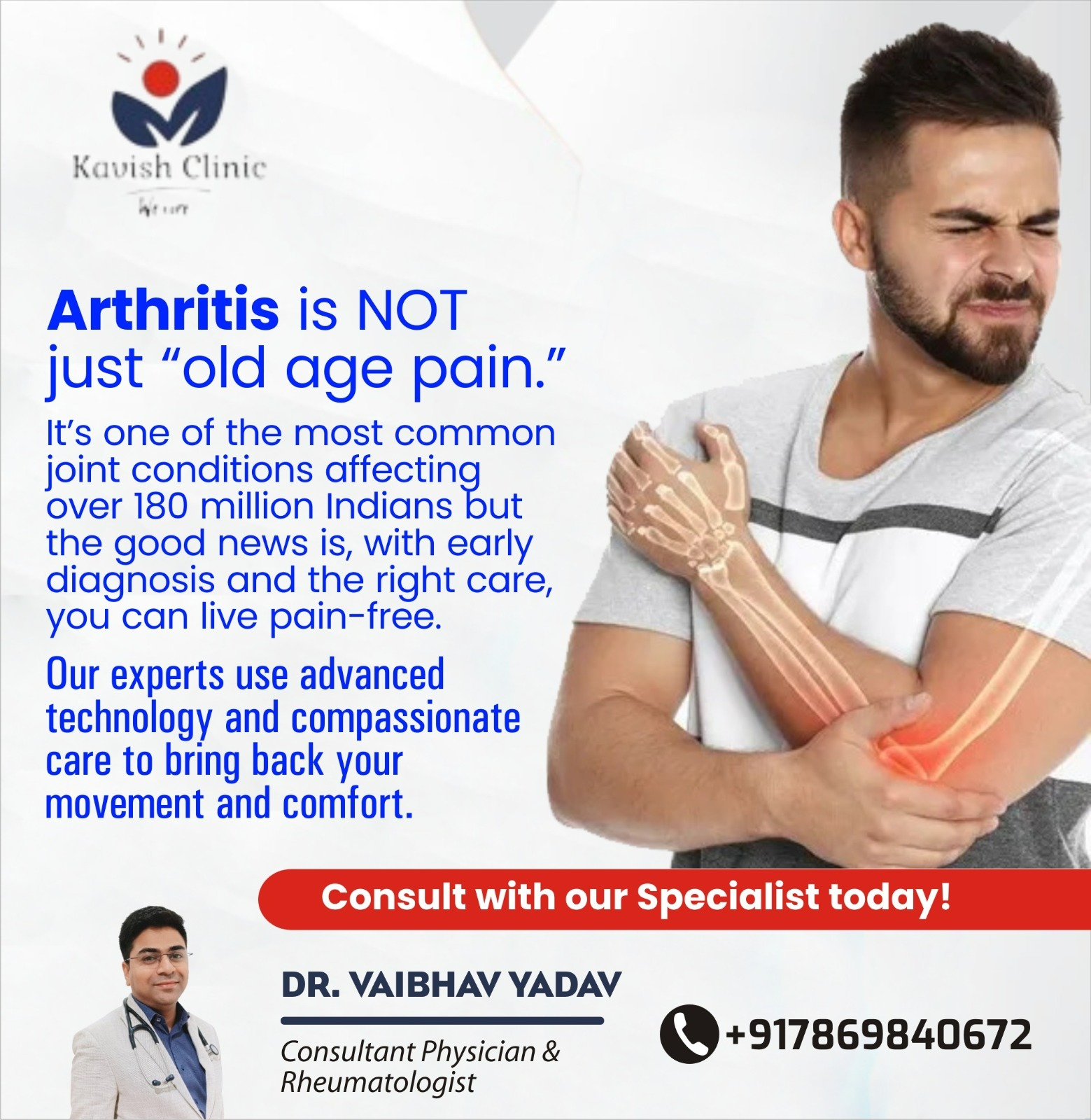
Arthritis in Indore: Early Diagnosis and Personalised Joint Care
Joint pain is often dismissed as a natural part of ageing, but arthritis can affect adults at different stages of life. Persistent pain, swelling, stiffness or reduced movement may indicate inflammation, cartilage damage, an autoimmune disorder or another condition affecting the joints.
Consulting an experienced Arthritis in Indore can help identify the specific type of arthritis and create a treatment plan based on its cause, severity and impact on daily activities. Early evaluation is especially important when symptoms continue for several weeks, affect multiple joints or make routine movements increasingly difficult.
At Kavish Clinic, Dr. Vaibhav Yadav provides evaluation and personalised care for people experiencing joint pain, swelling, morning stiffness and suspected rheumatic conditions.
Arthritis is a broad term used for conditions that affect one or more joints. It commonly causes pain, stiffness, swelling and difficulty moving the affected area. Different forms of arthritis can damage cartilage, inflame the joint lining, trigger crystal accumulation or result from immune-system activity.
Arthritis is not a single disease. There are many different types, and each may require a different approach to diagnosis and treatment. Osteoarthritis is the most common form, while rheumatoid arthritis, gout and other inflammatory conditions may also affect joint health.
This is why persistent symptoms should not be treated only with repeated pain-relieving medicines without understanding the underlying cause.
Symptoms can develop gradually or appear suddenly, depending on the type of arthritis. They may remain limited to one joint or affect several areas of the body.
Common signs include:
Pain, redness, warmth and swelling are recognised symptoms of arthritis, but their pattern can provide important clues about the specific condition involved.
No. Ageing can increase the likelihood of certain joint conditions, particularly osteoarthritis, but arthritis can also affect younger adults and children.
Younger individuals may develop joint problems because of:
Pain should therefore not be ignored simply because a person is considered “too young” for arthritis. A timely consultation with a rheumatologist in Indore can help distinguish temporary strain from an ongoing joint disorder.
Understanding the type of arthritis is essential because treatment for one condition may not be suitable for another.
Osteoarthritis develops when joint tissues, including cartilage, gradually deteriorate. It frequently affects the knees, hips, hands, feet and spine.
Typical symptoms may include:
Osteoarthritis commonly causes pain and stiffness that interfere with movement and routine activities.
Previous injury, repeated joint stress, excess body weight, ageing and family history may influence its development.
Rheumatoid arthritis is an autoimmune condition. The immune system mistakenly attacks tissues lining the joints, causing inflammation. It often affects joints on both sides of the body, such as both wrists, hands or feet.
Possible symptoms include:
Morning stiffness in rheumatoid arthritis often lasts longer than the stiffness associated with osteoarthritis. Early treatment can reduce the risk of progressive joint damage.
Gout is a painful inflammatory arthritis associated with urate crystal accumulation. It often causes sudden, intense pain in one joint, commonly the big toe, although ankles, knees and other joints may also be affected.
A gout attack may involve:
Gout commonly develops in episodes, with symptom-free periods between attacks.
Psoriatic arthritis can occur in some people with psoriasis. It may affect the fingers, toes, knees, spine or areas where tendons connect to bone.
Possible signs include:
Some individuals develop joint symptoms before obvious skin changes, making a detailed medical history important.
Reactive arthritis may develop after an infection elsewhere in the body. It can affect the knees, ankles, feet, eyes or urinary system.
Diagnosis generally involves reviewing recent infections, symptoms and examination findings because there is no single test that confirms every case.
Occasional joint discomfort after unusual physical activity may settle with rest. However, an appointment with an arthritis doctor in Indore should be considered when symptoms are persistent, recurrent or worsening.
Seek medical evaluation if you notice:
A hot, swollen joint accompanied by fever or chills may indicate a joint infection and requires urgent medical attention.
An effective arthritis diagnosis in Indore begins with understanding the full pattern of symptoms. The doctor may ask about the onset of pain, duration of morning stiffness, number of affected joints and activities that worsen or improve discomfort.
The consultation may include questions about:
The joints may be examined for:
Blood investigations may be advised when inflammatory or autoimmune arthritis is suspected. Depending on the clinical situation, tests may include inflammatory markers, rheumatoid factor, anti-CCP antibodies, uric acid and other relevant parameters.
No single blood test can diagnose every type of arthritis. Results must be interpreted together with symptoms and examination findings.
X-rays can help assess joint spacing, bone changes and structural damage. Ultrasound or MRI may be used when the doctor needs more information about inflammation, cartilage, tendons or surrounding tissues.
Diagnosis commonly involves medical history, physical examination, laboratory studies and imaging when required.
The right arthritis treatment in Indore depends on the diagnosis. The main goals may include reducing pain, controlling inflammation, preserving movement, preventing damage and improving daily function.
Medication may be used to control pain, inflammation or disease activity. Options differ significantly between osteoarthritis, rheumatoid arthritis, gout and other conditions.
Depending on the diagnosis, treatment may include:
Patients should avoid long-term self-medication because some medicines can affect the stomach, kidneys, liver, heart or blood pressure.
Suitable exercise helps maintain joint movement, muscular support, balance and overall function. The programme should be adapted to the affected joints and current level of pain.
Activities may include:
Regular physical activity is an important part of arthritis management and can support quality of life.
Exercise should be modified during severe inflammation or acute injury.
Excess body weight can increase stress on weight-bearing joints such as the knees, hips and feet. Gradual weight reduction may help improve movement and reduce mechanical load in suitable patients.
Weight management should combine realistic nutrition changes with safe physical activity rather than crash dieting.
In selected situations, injections may be considered to reduce inflammation or manage symptoms. Their usefulness depends on the diagnosis, joint involved and overall clinical condition.
Injections should not be viewed as a universal or permanent solution.
Surgery may be considered when severe structural damage causes persistent pain, disability or reduced quality of life despite appropriate non-surgical treatment.
The decision can depend on age, pain intensity, occupation, disability and the extent to which arthritis affects everyday life.
Not every patient with arthritis requires surgery.
Inflammatory arthritis can sometimes damage joints before visible deformity develops. Early medical care may help control disease activity and protect long-term mobility.
Timely diagnosis can support:
Pain relief alone does not always mean that the underlying disease is controlled. Regular follow-up may be necessary to monitor symptoms, test results and medicine safety.
Lifestyle measures cannot replace medical treatment, but they can support comfort and mobility.
During an arthritis flare, balancing activity with rest may help prevent excessive strain without allowing complete loss of movement.
Joint pain may also be caused by injury, infection, tendon problems, nerve compression or other medical conditions. Proper evaluation is needed.
Suitable exercise generally supports strength and mobility. The type and intensity should be adjusted according to the condition.
Many forms of arthritis can be managed effectively. Outcomes depend on the type, severity, timing of treatment and consistency of care.
Arthritis management may involve medicines, physiotherapy, activity changes, weight management, injections or surgery depending on the diagnosis.
Autoimmune, inflammatory, post-injury and childhood forms of arthritis can affect people well before old age.
When searching for the best rheumatologist in Indore, choose a doctor who investigates the type of arthritis rather than treating every joint complaint in the same way.
A detailed consultation should provide:
Patients should also receive realistic information about expected improvement and the importance of continuing treatment.
Some temporary forms may resolve, while chronic conditions generally require long-term management. Treatment can often control symptoms, reduce inflammation and protect joint function.
A rheumatologist specialises in arthritis, autoimmune diseases and other conditions affecting joints, muscles and connective tissues.
No. Testing depends on symptoms and the suspected condition. Blood tests are more commonly used when inflammatory, autoimmune, infectious or metabolic causes are being considered.
Yes. Certain inflammatory forms can also affect the skin, eyes, lungs, blood vessels or other organs. Report new symptoms during follow-up appointments.
Persistent joint pain, swelling or stiffness should not automatically be accepted as an unavoidable part of ageing. Identifying the type of arthritis early can guide suitable treatment and help protect movement, independence and quality of life.
For consultation with an Arthritis in Indore, connect with Dr. Vaibhav Yadav at Kavish Clinic for diagnosis-based evaluation and personalised joint-care planning. Contact Us Today to schedule an appointment and take a confident step towards better mobility and lasting joint health.
| Tags: | #Arthritis in Indore |


