
Low Back Pain Symptoms and Causes
Persistent low back pain can affect your work, sleep, and daily life. At Kavish Clinic, Dr. Vaibhav Yadav, a trusted Low Back Pain Specialist, provides personalized, evidence-based treatment to help you recover faster and move pain-free. Dr. Vaibhav Yadav focuses on identifying the root cause of pain and providing long-term relief so you can return to an active, pain-free lifestyle.
Visit Kavish Clinic today.
Symptoms of low back pain can vary widely from person to person, depending on the cause and severity of the condition. Some individuals may experience mild discomfort that improves with rest, while others may suffer from intense pain that affects daily activities and quality of life. The pain may be localized to the lower back or may radiate to the hips, buttocks, or legs.
Low back pain can be acute (short-term) or chronic (lasting more than three months). Chronic pain is often associated with stiffness, reduced flexibility, and difficulty in movement. Certain warning signs may indicate a more serious condition requiring immediate medical attention.
Common symptoms of low back pain include:
• Dull, aching pain in the lower back
• Sharp or shooting pain during movement or bending
• Stiffness and reduced range of motion
• Pain radiating to the legs or feet
• Muscle spasms or tightness
• Pain that worsens with prolonged sitting or standing
• Numbness, tingling, or weakness in the legs (in nerve-related cases)
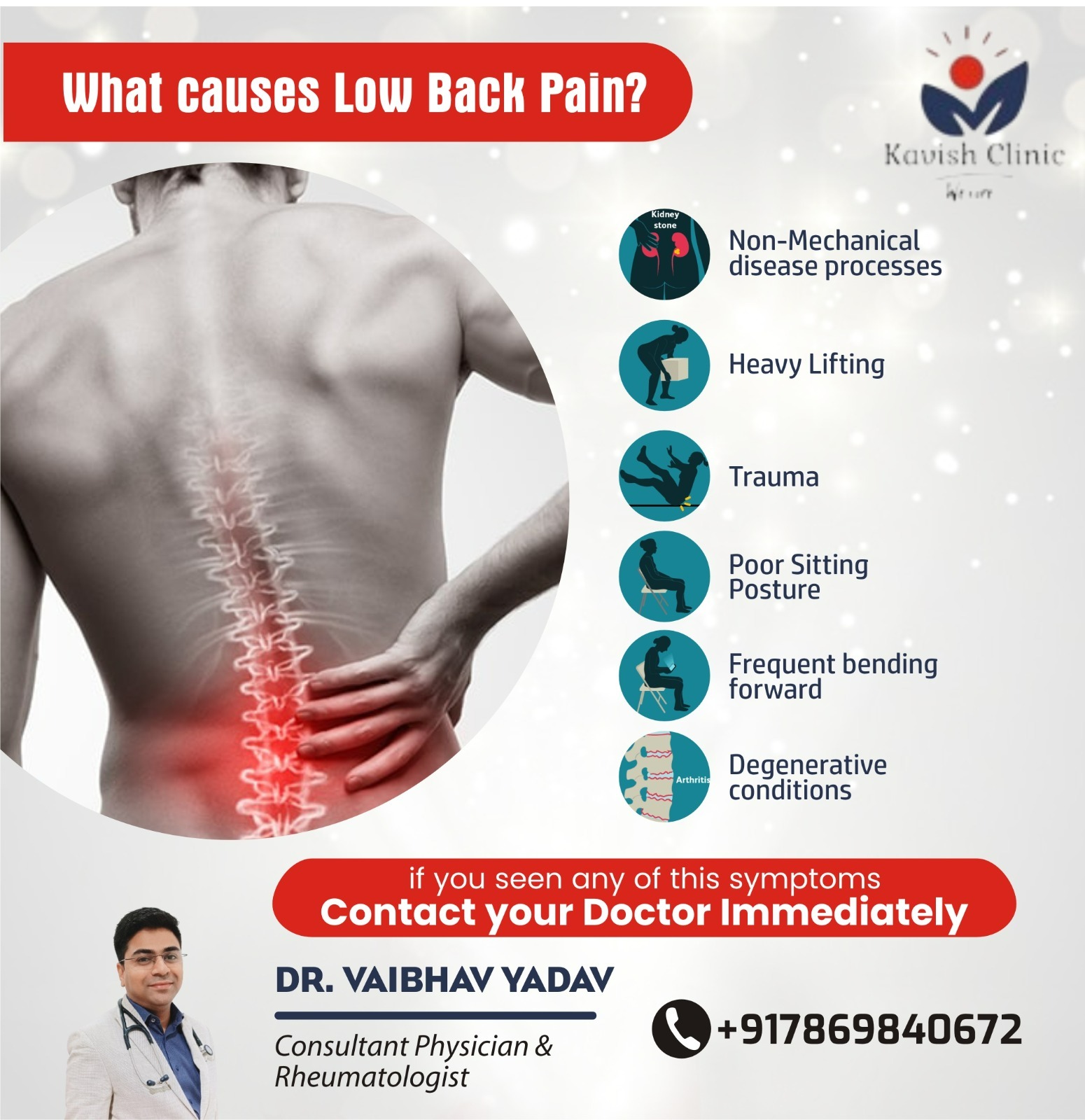
Low back pain can arise from a wide range of causes, varying from simple muscle strain to complex spinal conditions. In many patients, especially adults with sedentary lifestyles, low back pain develops due to daily habits such as prolonged sitting, poor posture, or lack of physical activity. These factors gradually weaken the back muscles and place excess stress on the spine, leading to pain and stiffness.
In other cases, low back pain may be related to underlying structural or degenerative conditions of the spine. Age-related wear and tear, disc problems, or nerve compression can result in persistent or recurring pain. Injuries from accidents, sudden movements, or lifting heavy objects incorrectly are also common contributors. Identifying the exact cause is crucial, as treatment depends largely on the underlying problem.
Common causes of low back pain include:
• Muscle strain or ligament sprain due to overuse or sudden movement
• Poor posture and prolonged sitting, especially in office workers
• Slip disc or herniated disc causing pressure on spinal nerves
• Sciatica resulting from nerve compression
• Degenerative disc disease or age-related spine changes
• Injury, trauma, or sports-related strain
• Obesity and lack of physical fitness increasing spinal load
How Low Back Pain Is Diagnosed
Accurate diagnosis is the foundation of effective low back pain treatment. Dr. Vaibhav Yadav follows a systematic and patient-focused approach to identify the root cause of back pain. The diagnostic process usually begins with a detailed medical history and physical examination to understand the nature, duration, and triggers of pain.
During the physical examination, posture, spinal alignment, muscle strength, flexibility, and nerve function are carefully assessed. If required, advanced imaging tests are advised to confirm the diagnosis and rule out serious conditions. Early and accurate diagnosis helps in choosing the most appropriate treatment and prevents unnecessary complications.
Diagnostic methods for low back pain include:
• Detailed patient history and clinical examination
• Assessment of posture, movement, and muscle strength
• X-rays to evaluate bone structure and alignment
• MRI scans to assess discs, nerves, and soft tissues
• CT scans in selected cases for detailed imaging
• Neurological examination if nerve involvement is suspected
When Is Surgery Required for Low Back Pain?
Most cases of low back pain can be managed successfully with non-surgical treatments such as medications, physiotherapy, lifestyle modification, and rehabilitation. Surgery is considered only when conservative treatments fail to provide relief or when there is a serious underlying condition that threatens nerve function or spinal stability.
Dr. Vaibhav Yadav recommends surgery only after thorough evaluation and when it is clearly beneficial for the patient. The decision for surgery is based on symptoms, imaging findings, severity of pain, and impact on daily life. The goal of surgery is to relieve nerve pressure, stabilize the spine, and improve overall function.
Surgery may be required in cases of:
• Severe slip disc with nerve compression not responding to treatment
• Progressive weakness, numbness, or loss of bowel/bladder control
• Spinal instability or deformity
• Persistent chronic pain affecting quality of life
• Certain traumatic spinal injuries
Why Choose Dr. Vaibhav Yadav for Low Back Pain Treatment
Dr. Vaibhav Yadav is known for his patient-centric approach and evidence-based management of low back pain. He focuses on identifying the root cause of pain rather than only treating symptoms. With a strong emphasis on accurate diagnosis, personalized treatment plans, and conservative management whenever possible, patients receive comprehensive and ethical care.
Dr. Yadav believes in educating patients about their condition and involving them in the treatment process. His approach combines modern medical knowledge with rehabilitation and preventive strategies to ensure long-term relief and improved spinal health.
Reasons to choose Dr. Vaibhav Yadav include:
• Thorough and accurate diagnosis
• Personalized non-surgical and surgical treatment plans
• Focus on long-term pain relief and prevention
• Patient education and lifestyle guidance
• Ethical, transparent, and compassionate care
Frequently Asked Questions
1. What is the most common cause of low back pain?
Muscle strain, poor posture, and prolonged sitting are among the most common causes of low back pain.
2. How long does low back pain usually last?
Acute low back pain may improve within a few weeks, while chronic pain can last longer and may require medical treatment.
3. Is walking good for low back pain?
Yes, gentle walking is often beneficial, but it should be done based on medical advice and pain tolerance.
4. When should I consult a doctor for low back pain?
If pain persists for more than a few weeks, worsens, or is associated with numbness, weakness, or bladder issues, medical consultation is advised.
5. Can low back pain be prevented?
Maintaining good posture, regular exercise, weight control, and ergonomic work habits can help prevent low back pain.
Best rheumatologist in Indore | Best Sjogren's syndrome specialist in Indore | Best scleroderma specialist in Indore | Best Behcet's disease specialist in Indore | Best ankylosing spondylitis treatment in Indore | Best lupus nephritis treatment in Indore | Best systemic lupus erythematosus (SLE) treatment in Indore | Best myositis treatment in Indore | Best low back pain specialist in Indore | Best hypertension specialist in Indore | Best diabetes specialist in Indore | Best thyroid specialist in Indore | Top Sjogren's syndrome specialist in Indore | Top scleroderma specialist in Indore | Top Behcet's disease specialist in Indore | Top ankylosing spondylitis treatment in Indore | Top lupus nephritis treatment in Indore | Top systemic lupus erythematosus (SLE) treatment in Indore | Top myositis treatment in Indore | Top low back pain specialist in Indore | Top hypertension specialist in Indore | Top diabetes specialist in Indore | Top thyroid specialist in Indore | Top rheumatologist Indore
#LowBackPainSpecialist #DrVaibhavYadav #KavishClinic #BackPainRelief
| Tags: | #Low Back Pain Symptoms and Causes , #BackPainRelief, #KavishClinic , #DrVaibhavYadav |


